
Summary Chapter 1 – Introduction
This thesis deals with selected aspects of the many floral motifs, which were used in
Jewish art during the late Hellenistic and early Roman periods (167 BCE – 135 CE) in Eretz Israel. The most important feature of the art of this period was the strict observance of the prohibition to represent humans or animals. Consequently, plant motifs were dominant in the Jewish art forms surveyed here, such as mosaic floors, wall paintings, clay lamps, coins, tomb facades, stone coffins (sarcophagi) and ossuaries.
From the many examples of plants appearing in Jewish art, we have chosen to investigate the following: rosette, lily, olive, laurel, myrtle, palm-branch, vine, pomegranate, date palm, ethrog, acanthus, oak and pine trees. Each chapter treats a motif whose photo appears alongside the text. The views and opinions of earlier scholars are quoted. Comparisons were made with the art of the contemporary gentile world, since the Jewish artists copied their designs. This procedure frequently exposed an unknown source and purpose for the motif. Furthermore, the artistic product was compared with the natural plant.
Chapter 2 – The Rosette
The rosette is the most common motif found on ossuaries, but it also appears on sarcophagi, tomb facades, mosaic floors and oil lamps. The plain, six-petal rosette is a simple schematic-geometric design which, over time, evolved into a form representing many and varied flowers. Tracing this evolvement from simple to elaborate not only helps recognize the variations of the rosette but provides a framework to identify the same metamorphoses in other flowers as well.
The name rosette comes from the botanical class Rosa. This name does not really fit the motif, but despite the inconsistencies, it is too late now to find a new term to replace rosette, so we will persist with this accepted designation. Few artistic examples of rosettes exist which bear any resemblance to a real plant:
Imitations of flowers from the Composite Family – occasionally the flower is depicted having a prominent circular center reminiscent of flowers from the Composite Family. In all probability the artist tried to copy flowers from this family, such as one of the variations of daisy, corn-camomile or groundsel.
Chapter 3 – Lily
This motif has also been variously called a daffodil, a lotus, a lily, an iris or a side view of a rosette. In this chapter, we present a thorough survey of the lily as an artistic motif, and conclude that the prototype for the lily was the lilium candidum. The lily was incorporated both into spaces left by trailing branches and in empty corners and angles (horror vaccui). Lilies filled spaces shaped as facing cones on ossuaries, placed between two rosettes. Often the architectural motif blended with the plant motif. The artists were challenged to fill this space, resulting in many variations of the lily. When the upper and lower images were identical, scholars interpreted these variations as trees with their roots, or reflections in water. The tables accompanying the text try to arrange the many decorations, which could be identified as a lily flower. We gave the lily alternate names to try to match its many variations. In this chapter, we also prove that what is often taken to be a palm tree, is in fact a stylized lily flower.
Chapter 4 – Branches and Wreaths
Branches appear in various shapes: straight, bent, curved like an arch, round as a circle or
a wreath. Most are decorated schematically, stiff and lifeless. For this reason, the botanical description is faulty, many scholars failed to agree in their identification and much confusion remains. We identify here three chief shapes of leaves: short and narrow, elongated and very narrow, and wide and elongated. This chapter concentrates on the recognizable branches and identifies them as olive branches, laurel, myrtle and palm branches and wreaths composed of the ivy fruit. Olive – The value of the olive in daily life due to its many uses is an accepted fact, so its use as an artistic motif is not surprising. Indeed, it is its infrequent appearance in art that is astonishing. Consequently, some scholars tended to identify different plants as olive branches. In this thesis, only narrow, pointed leaves called olive leaves.
Laurel – There is no doubt among scholars that the laurus nobilis, known in Roman mythology and literature, is the laurel. The Talmudic term for the laurel is dafna. The laurel was a popular tree, very significant and useful, and well known in the Roman world. Its leaves are wide, occasionally with webs of veins and wavy edges.
Myrtle – In classical Greece, the myrtle plant symbolized love and peace, and, in combination with laurel, was used to plait wreaths to be awarded to victorious athletes and poets. It does not appear much in contemporary Jewish art despite being one of the ceremonial "four species". Here we cite two examples from Jewish art, which can be recognized as myrtle, the shape of both the leaves and the fruit identifies them.
Palm Branch – The palm branch does not appear as often as one would expect, considering the ease with which it can be depicted. An explanation may be that the artists could choose motifs, which did not include the palm branch. Its appearance on Jewish coins is not unusual since it was a motif on Roman coins of the time, and their depiction is similar. The carving of the palm branch on ossuaries, however, is uniquely Jewish. Elongated narrow leaf is its trademark.
Wreaths composed of circular bodies with a hole – fruit of the ivy – decorations of fruit which closely resemble these round bodies, are found on rock carvings in Italy, where the ivy fruit is integrated artistically with the climbing plant. Since these fruit resemble the circular motifs on the rock carvings, and since the carved fruit on the ivy plant are identical to the round bodies, it is suggested here to identify them as ivy fruit.
לייעוץ, ארגון והדרכת טיולים בארץ ובחו״ל: כתבו לי
נהניתם מהתוכן באתר או מטיול איתי? אשמח שתספרו על כך בגוגל
כתיבת ביקורת בגוגלChapter 5 – Heart-Shaped and Related Motifs
In this chapter we deal with three motifs: pointed heart-shaped leaves, ivy leaves, and heart-shaped buds
Scholars classified them under non-specific terms such as "ivy" or "pointed heart-shaped" leaves. Botanically, they can be treated individually.
Pointed heart-shaped leaves are described as rosette petals or as green leaves of plants.
Flowers consisting of rigid heart-shaped petals rarely appeared in Second Temple Jewish art. On the few occasions that they were on ossuaries, they were integrated among the other leaves of the simple six-petal rosette or were the only component of the rosette. The flowers from which these petals were copied most likely belonged to those of the Composite Family, which, when seen from above, closely resemble this rosette. The chrysanthemum is suggested as the model for this motif.
Green heart-shaped leaves, when used in Jewish art, were stylized and flexible in shape. They generally appeared together with tendrils, becoming known as smilax or green brier.
Ivy leaves consist of three or five lobes and have no tendrils. Artists who, as mentioned above, were well acquainted with plants realistically portrayed them.
Stems with heart-shaped buds – Heart-shaped buds also became a distinct motif, with the heart appearing either upside-down or as a small parasol. We have shown that its inspiration was other buds depicted on stems and combined with flowers and leaves.
Chapter 6 – Acanthus
Acanthus leaves were depicted in art in three ways: One was realistic, with elongated leaves; the second had a shortened rounded leaf; the third was in the shape of a cup with three leaves. Despite this, the acanthus could be identified with certainty, except when its depiction was so stylized that it no longer resembled the original plant and the identification became doubtful.
Shortened acanthus and rounded acanthus leaves were used where room was limited and the space available determined the shape.
The acanthus cup was one of the successful combinations creating symmetry by filling the empty space between the rosettes on stone sarcophagi and ossuaries. This ornamentation also filled the empty center of the gable on the facades of tombs. This example likely copied the acanthus plant in nature.
Chapter 7 – Vines: Leaves and Clusters
Grape clusters are often reminiscent of those, which adorned Nabataean and Roman art. The elements that penetrated Jewish art, were not necessarily Jewish symbols, but were good decorations, pleasing to the eye and familiar to the viewer.
Triangular grape clusters were not an artistic innovation – the grapes look that way when full and ripe. Its inclusion in a work of art testified both to the wealth of the patron and to his or her artistic taste. This attitude should be applied to all styles popular at that time. Small grape clusters consisted of small round grapes, and adorned building facades and ossuaries. They were used to fill empty spaces that were too small to fill with a large
grape cluster. These too were not artistically embellished, but rather were a naturalistic
representation of the small grapes, which grew on vines together with the large full clusters. Vine leaves were not used often in Jewish art although the vine was one of the "seven species" and its leaves were lovely. They had three or five lobes, protruding central veins, and the edges were serrated. All these features appeared in the reproductions.
Chapter 8 – Pomegranates
The pomegranate is symmetrical, easy to reproduce artistically and to identify due to its unique shape – a large round fruit with a crown of petals. It is occasionally hard to define, and attempts were made to relate it to the poppy. On coins, the pomegranate was combined with the Roman cadduceus. The pomegranate flower can be confused with the flowers of the bell-shaped lily.
Chapter 9 – Palm Tree
The palm tree had great economic value, enriching Judea and earning her fame. Consequently, the palm tree, as depicted on coins, symbolized both wealth and power. Despite its symbolism on coins and the ease with which it could be depicted, however, in other Jewish art forms of the period, the palm apparently was not a national-religious symbol, nor did it represent the Judean people. In this study, the term "palm tree" refers only to artistic elements shaped as a convex half-circle. On ossuaries, some of the motifs used to fill the two cone-shaped spaces, which provided the framework to the decorated zone, were sometimes identified as palm trees. Here it is proven that very few were.
Chapter 10 – Ethrog
Two elongated fruits appear in the artwork of this period. We can safely presume that the fruit depicted with the uneven surface was the ethrog and the one with the smooth skin was the lemon. The evidence cited in this chapter supports the claim that the lemon was known in this region already during Second Temple times. But, it is also possible that both fruits are actually tow different breeds of the Ethrog.
Chapter 11 – Oak
Depictions of oak branches with their acorns were neither common nor original in Jewish art. Their use in art originates in the gentile world. The oak used in Roman art grew in Italy, not in Land of Israel, and the local artists copied the Italian oak without changing it to resemble the native oak, which grew all around. We can presume that they felt no need to since both types looked so alike.
Chapter 12 – Pine
Pine branches with their pinecones very rarely appeared in Jewish art. This motif also had its origins both in neighbouring countries and Roman art. Since pine trees grew in the Judean hills, their form was familiar.
Principal Conclusions from this Research:
1. The use of motifs
The local artists generally used ready-made plant designs taken either from their surroundings, from western art, or from eastern sources (Nabataeans).
2. The Integration of Land of Israel Plant Forms into Native Art
The plant forms adopted into Jewish art were only those whose shapes were familiar. In this comprehensive survey, we did not come across any plant that does not grow In Land of Israel. The fact that no foreign plant shape was accepted into the repertoire of homegrown art, upholds the claim that local art could absorb only designs to which the inhabitants were accustomed.
3. Harmonizing Foreign Motifs
Pagan art consisted of scenes, which showed images of gods, humans and animals, and using such scenes required major changes and alterations to conform to the Jewish art world. After these were carried out, additional adjustments were still necessary for various reasons: making the plants resemble the familiar local variety, giving the plant shape a geometrical quality and vice versa, simplifying the form, creating a new design by combining several others, fitting the subject into the space allotted. Sometimes, several of these changes were applied to the same figure.
4. The Artists' Knowledge of Plants
The artists who modeled the original plant forms were familiar with the plants and made no errors in their depiction. Furthermore, we found neither imaginary nor unrealistic plant forms.
5. Limited Choice of shapes
Despite the large number of plants to choose from, the artists chose to work with a limited number and they were used over and over again in many variations.
6. Interchange of Culture and Fashion
The motifs found in the Jewish art studied here were also to be seen in the gentile art of the period, evidence of the mobility of artists, motifs and ideas. The themes that were adopted were those that were popular at the time.
7. The Blending of Shapes
Occasionally, shapes were fused in order to create a new form.
8. Overcoming horror vaccui
The need in art to fill empty spaces helped determine the choice of filler because it had to be able to fit the space. Sometimes changes had to be made to the original design in order to have it fit the space available.
9. No Evidence of Symbolism
This study reveals a distinct and dominant tendency in Jewish art, to use ready-made designs available from the gentile world. It would seem, then, that the local artists attached no symbolic, cultic, religious, or Judaic significance to their motifs, but used popular and familiar designs common to the general art world of the time.
BAR-ILAN UNIVERSITY
Selected Aspects from the Floral Motives in the Jewish Art of the Late Hellenistic and
Early Roman Periods
(167 BCE-135 CE)
ANAT AVITAL
Submitted in partial fulfillment of the requirements for Master's degree in the Martin
(Szusz) Department of Land of Israel Studies and Archaeology, Bar-Ilan University.
Ramat-Gan, Israel 2005
The following paper was written under the supervision of
Professor Amos Kloner
of the Martin (Szusz) Land of Israel Studies and Archaeology Department, Bar-Ilan
University

נהניתם מהתוכן באתר או מטיול איתי? אשמח שתספרו על כך בגוגל
כתיבת ביקורת בגוגלמה חדש באתר "מטיילים עם ענת"
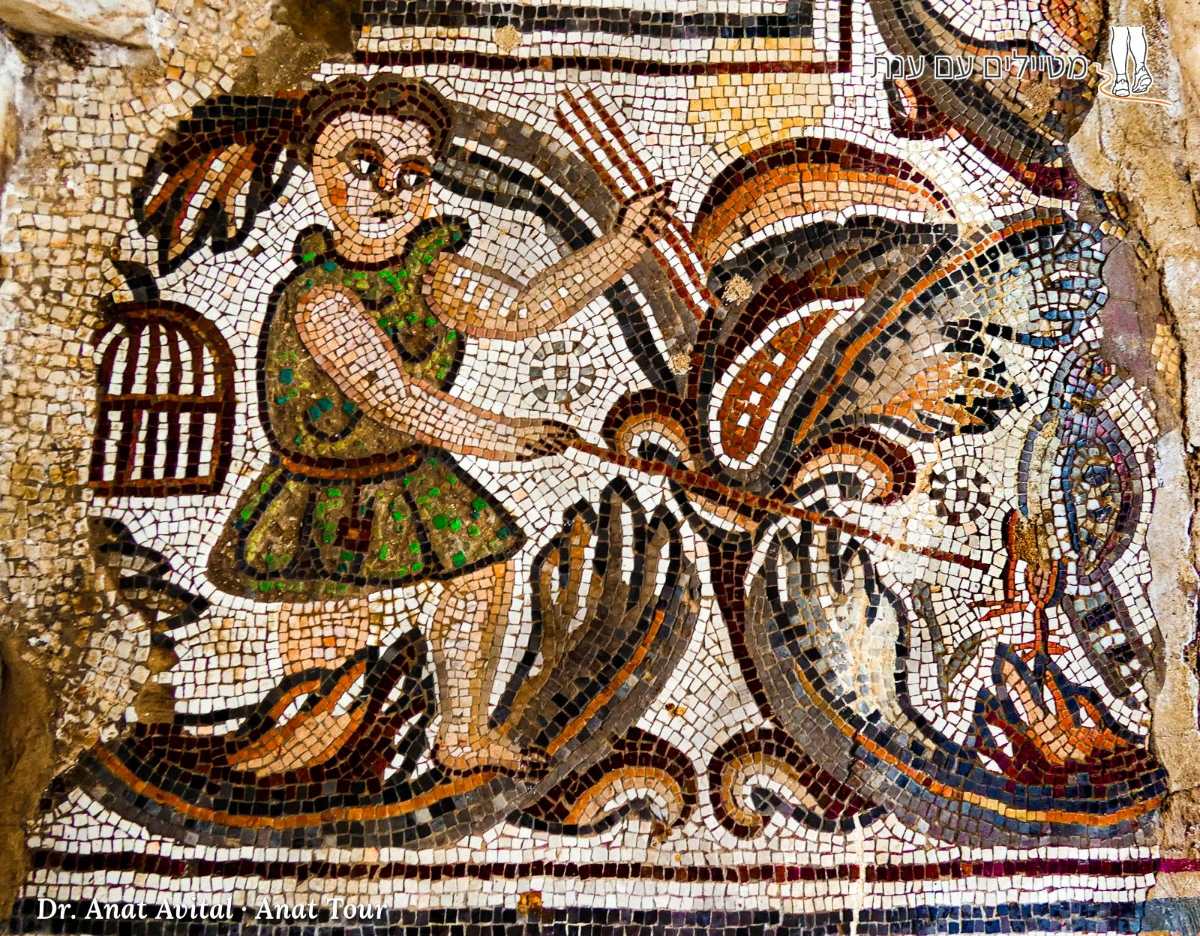 פסיפס הכנסייה הביזנטית בנהרייה
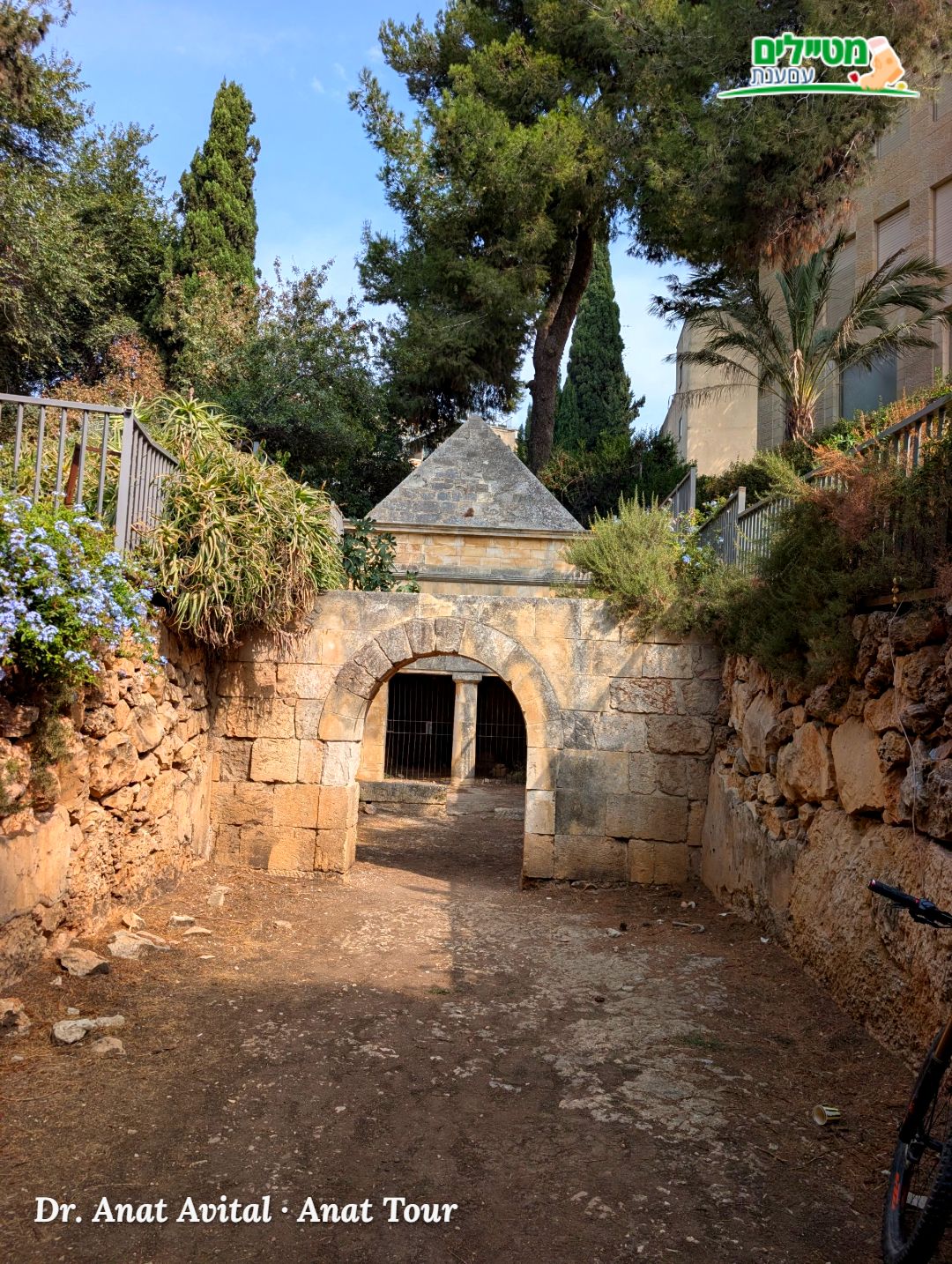 קבר יאסון ברחביה – טיול אופניים בירושלים ביום הבחירות – כי מה יותר סמלי מזה
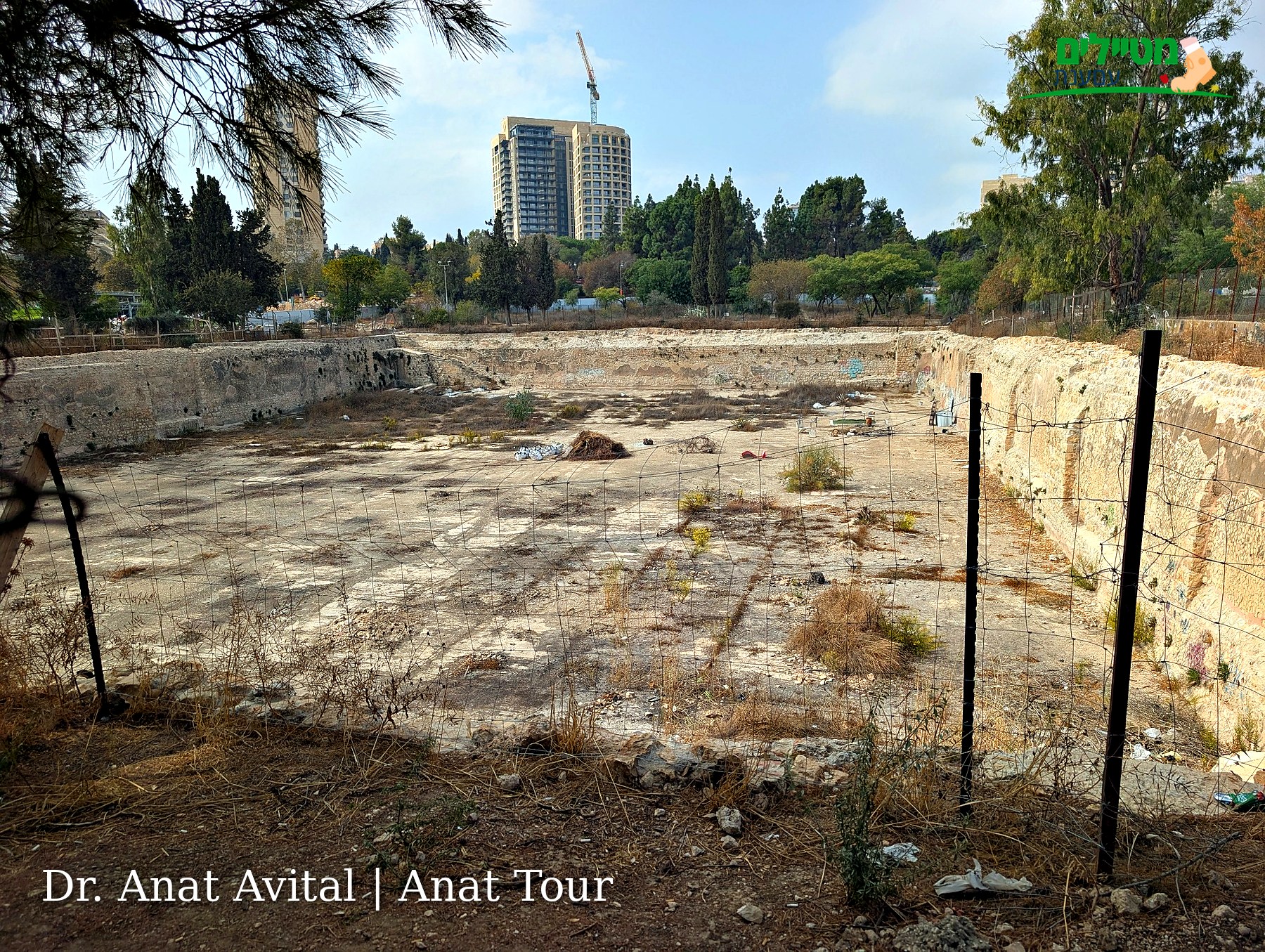 בריכת ממילא, בית קברות ומלון פאלאס: עוד עצירה בטיול האופניים שלנו בירושלים
 יונקים ועופות מפסיפס בית האמידים הרומי בלוד – וילה מוזיאון לוד – כנס העשור לוד דיוספוליס | ד"ר ענת אביטל מאי 2024
 שביל ישראל וטיילת נתניה באופניים או ברגל – כל היופי מפולג ועד לחופי נעורים – מקטע 18
 מקוריותם של התיאורים החקלאיים הייחודיים מפסיפס בית הכנסת השומרוני בסמארה
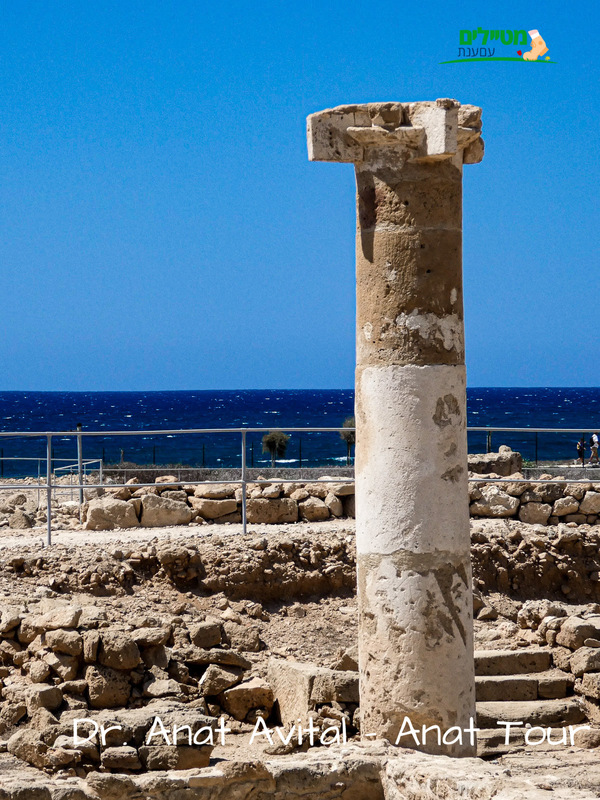 בית דיוניסוס והפארק הארכאולוגי של פאפוס בקפריסין, טיול עצמאי: פסיפסים, עתיקות וכל מה שכדאי לראות
 סיציליה – מה עושים שם? הטיול העצמאי שלי עם הנכד מסביב לאי
 פאפוס, קפריסין: באתי בשביל הפסיפסים, נשארתי בשביל חופשה בים
 פסיפס מרהיב מכנסיית באר שמע בנגב המערבי – בעלי חיים, דמויות וסצנות חיי היומיום מהתקופה הביזנטית

booqli – ספרים בהתאמה אישית לילדים