
In the heart of a residential neighbourhood in Nahariya, beneath a protective shelter, lies the mosaic floor of a Byzantine church from the sixth century CE. It is one of the most impressive floors found in the Western Galilee. The mosaic covers more than 500 m². Of the more than 100 medallions that once decorated it, 87 survive, showing animals, birds, human figures and plants. At the centre of the floor, in a sea of red rosebuds, is a colourful circle with an open red rose at its centre.
History of the Site
The remains were discovered in 1964, during foundation work for a youth club in an extension of the Katznelson School.
The church hall was divided by two rows of marble columns, with capitals carved with plant motifs. In front of the central apse stood a bema enclosed by marble panels. The panels carry Greek inscriptions naming the donors, and two of them show deer facing a cross. The church was destroyed by fire in 614, during the Persian invasion. Black and white stains on the mosaic and large quantities of melted lead bear witness to the fire to this day.
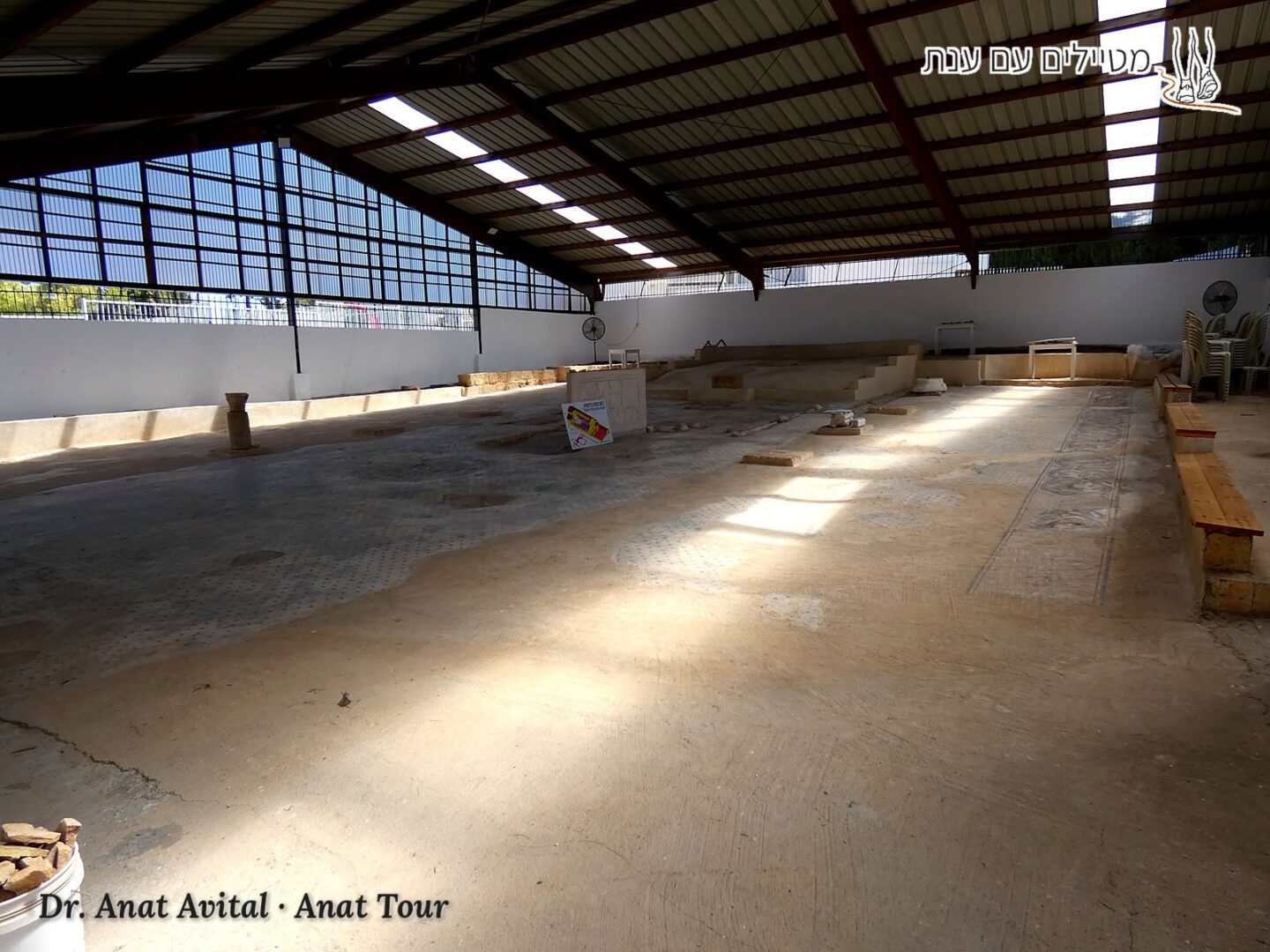
In 1984 a protective shelter was built over the mosaic, donated by the German city of Bielefeld, Nahariya’s twin city. In 1988 experts came from Bielefeld and restored sections of the floor. In 1992 the site was closed to the public and stood neglected for many years. At the end of 2019 tour guides from Nahariya approached the municipality, and under the supervision of the Israel Antiquities Authority, with professionals and volunteers, the site was cleaned and restored over two years. In April 2022 it reopened to the public.
On 10 April 2026 a rocket fired from Lebanon struck the protective shelter. The debris fell onto the mosaic, but the mosaic itself was not damaged. Municipal teams repaired the shelter, and in August 2026 the site reopened to the public. The photographs in this post were taken during my visit to the site shortly after the reopening.
Visiting the Mosaic Site
Visits to the Nahariya mosaic site must be arranged in advance with the representatives of the Nahariya Municipality: Eliahou Oknin, tour guide, tel. +972-54-786-7840, and Rony Peled, tour guide, tel. +972-50-627-2880. Address: Givat Katznelson, Abir Ya’akov Street, next to the Katznelson School.
The Circle and the Rosebuds
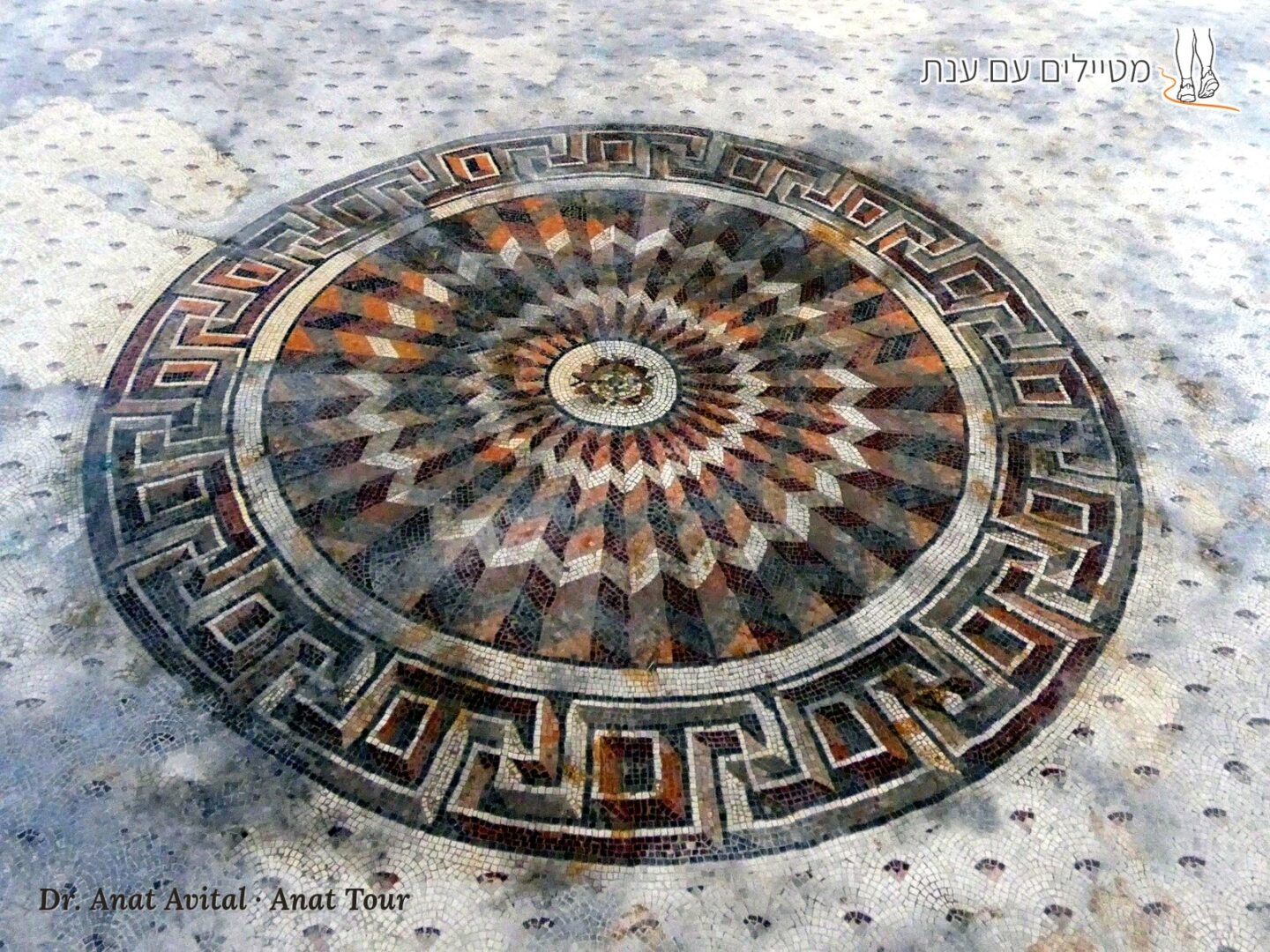
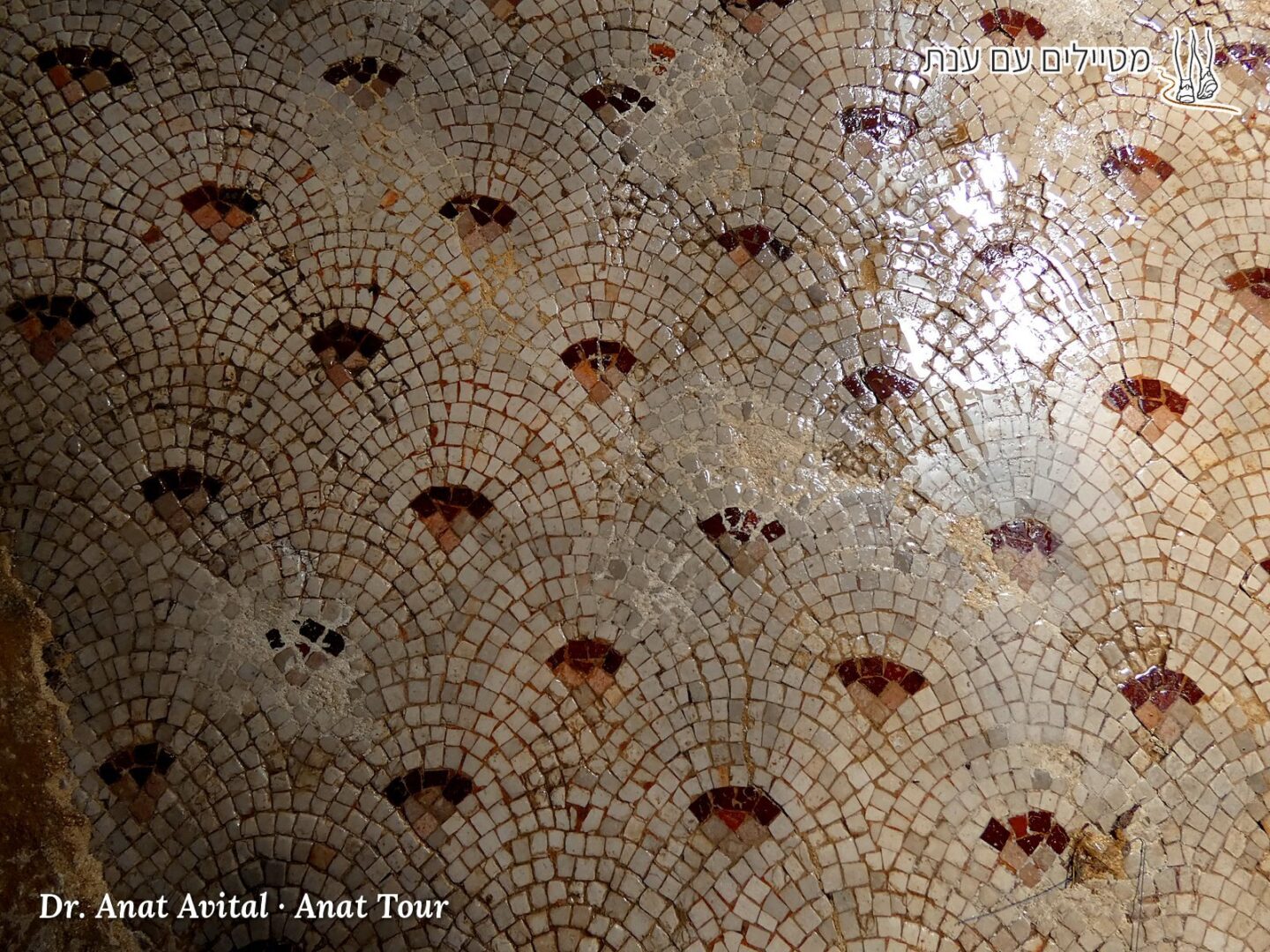
At the centre of the floor is a large circle with a large red rose at its centre. Around it, colourful concentric rays form the pattern of a folded fan, through a precise play of light and shade. The circle is framed by a meander pattern, which also creates a sense of depth. Around the circle red rosebuds are scattered, within a masterly composition of semicircles of white tesserae that covers the entire floor of the main hall. The white tesserae form a pattern of semicircular roof tiles laid one upon another.
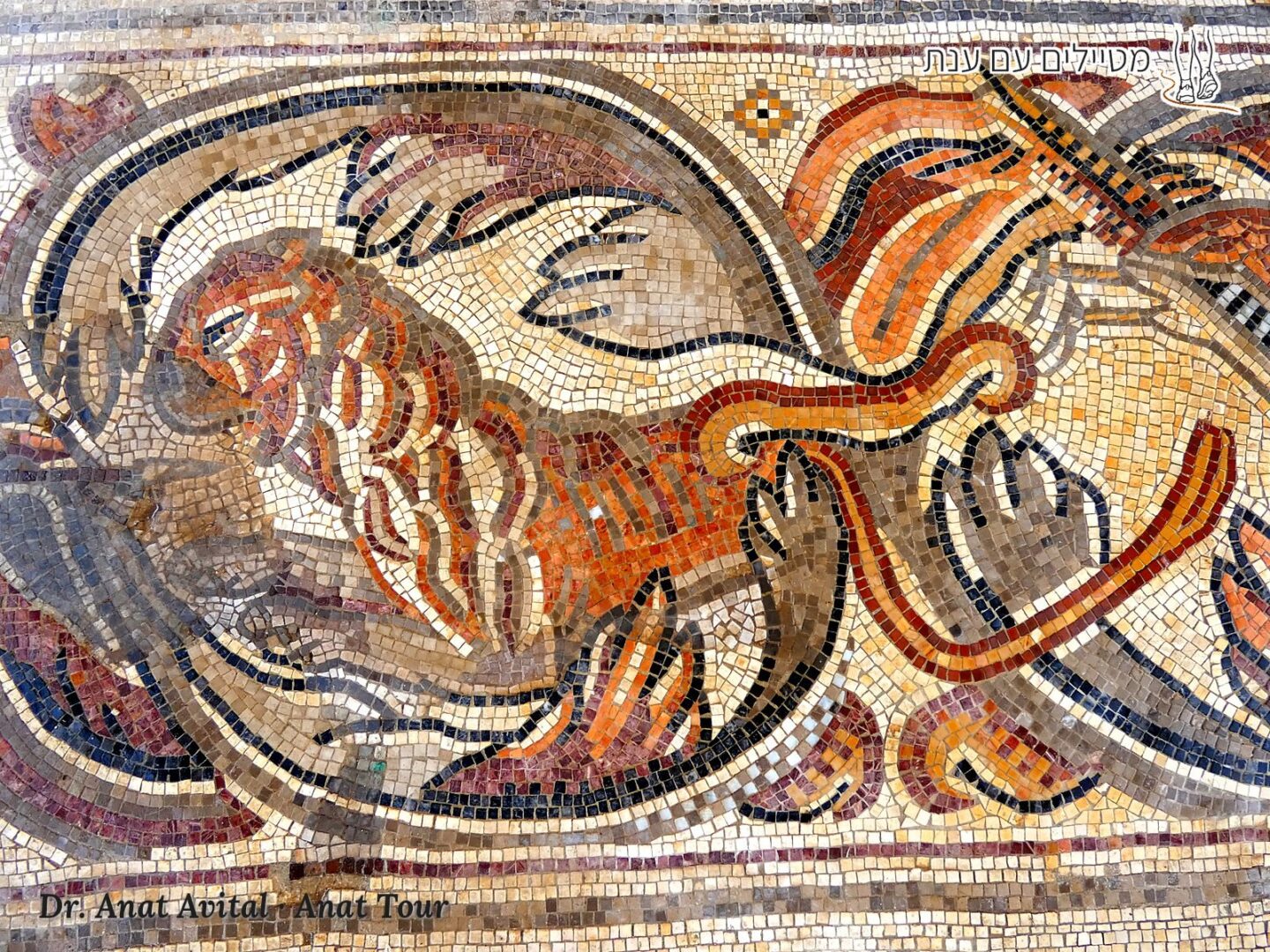
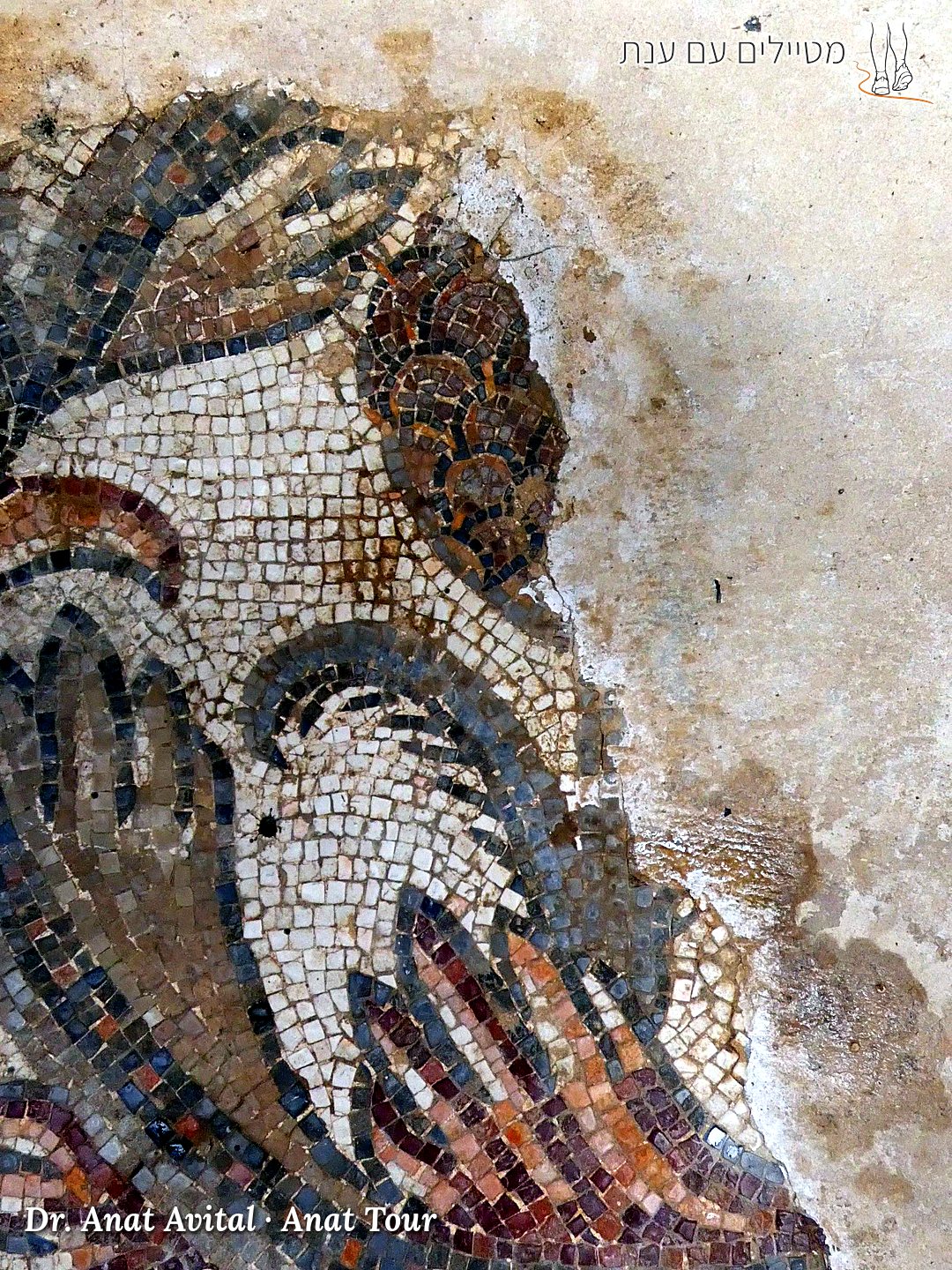
Around the centre of the hall runs a band of acanthus-leaf medallions, of which only about half survives. In the surviving part, human figures are set alongside mammals, birds, plants and fruit, shrimps, tools and vessels.
Mammals
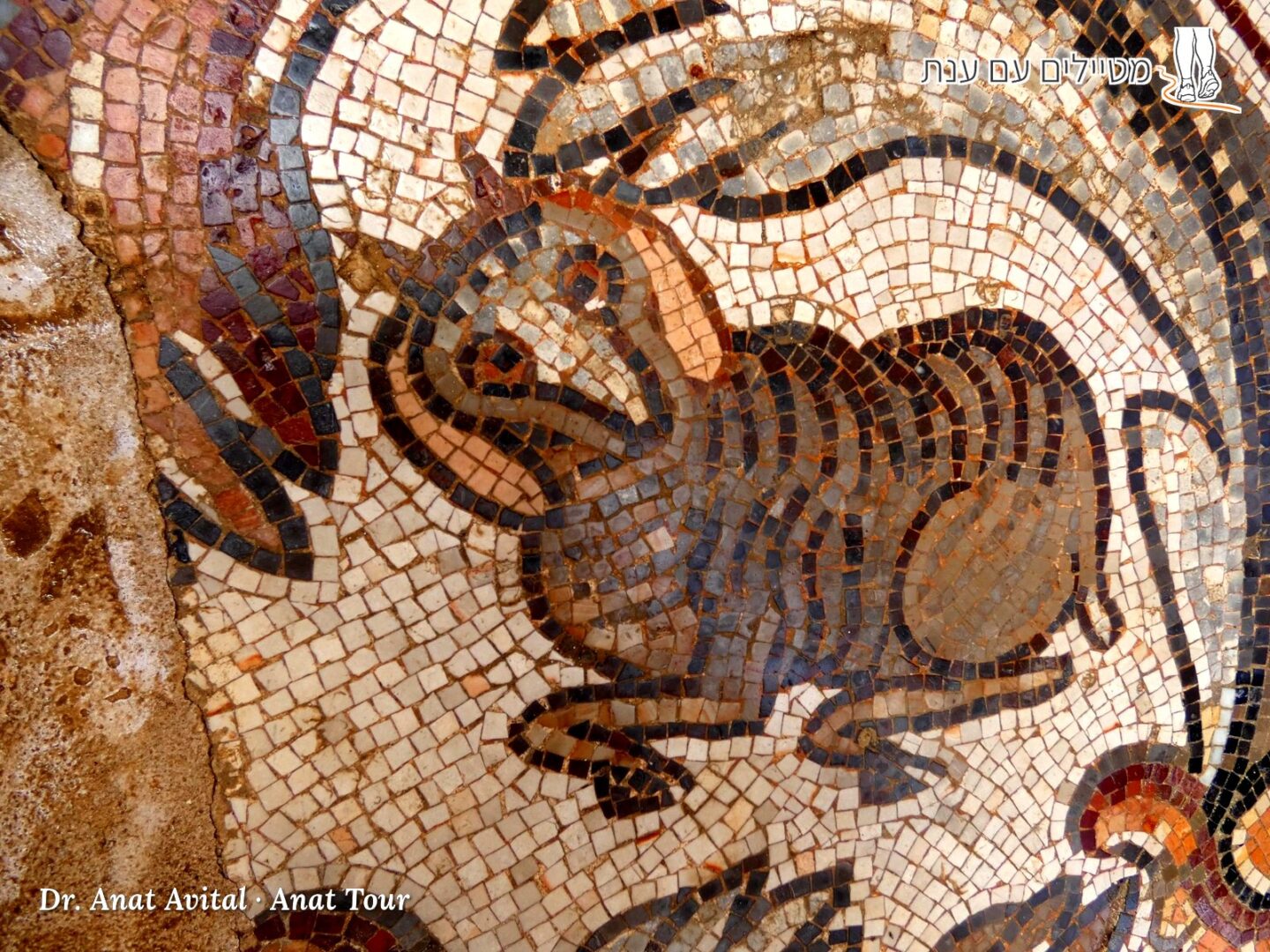
Large wild mammals appear in the mosaic in hunting scenes. The great predators face hunters holding spears: a hunter drives a spear into a leopard, and the spearhead emerges on the other side of its pelt; a lion is hunted with a spear; and a tigress with a cub faces a hunter, in a medallion restored quite faithfully to the original. Hunting protected the settlements and their farms from large predators, which entered the settlements and preyed on livestock and even on people.
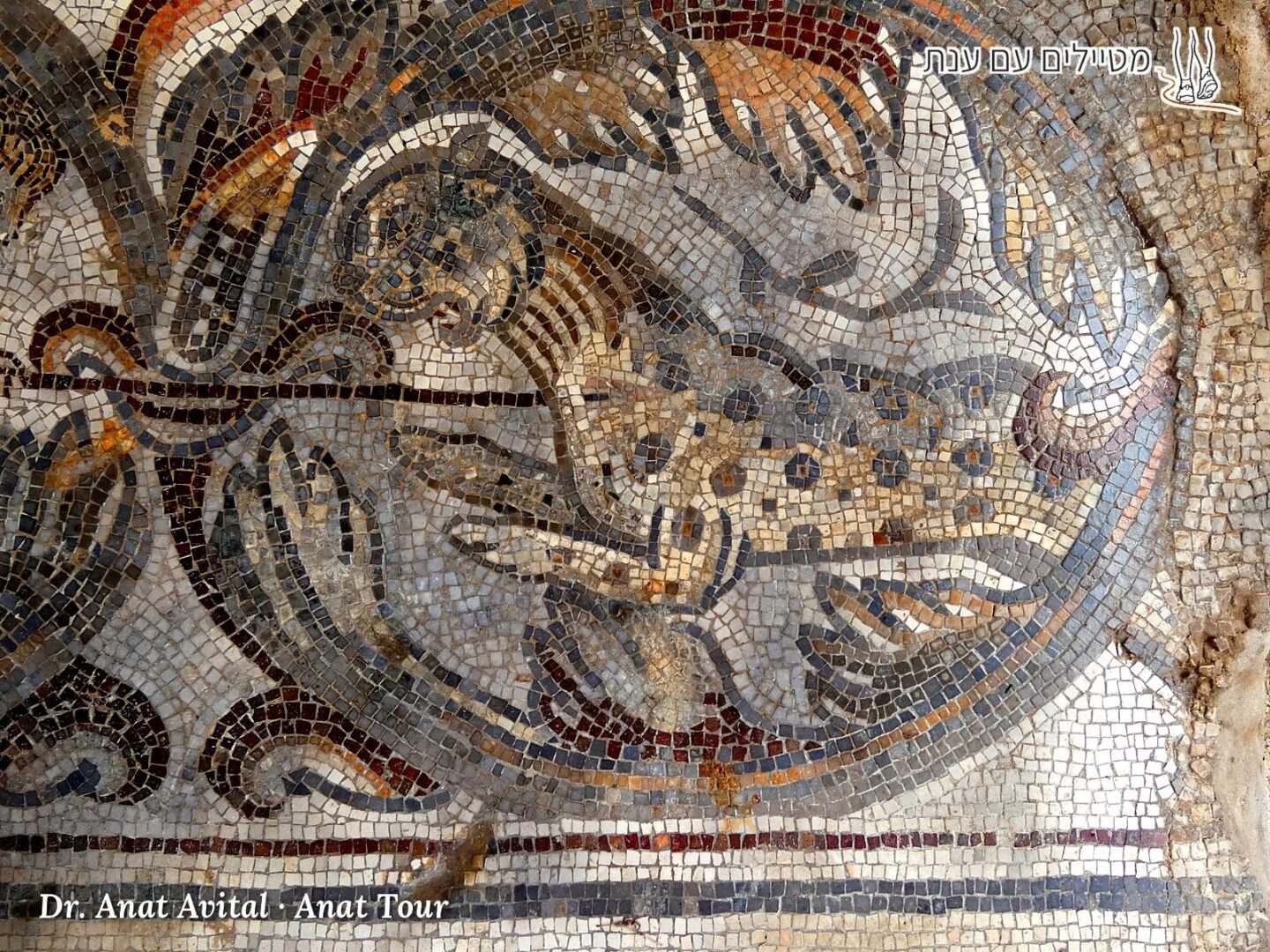
Beside them are domestic mammals: a zebu bull, shown facing a leopard, a fat-tailed ewe, a black goat lying down, and dogs of the Canaan breed, a curled-up puppy and an adult dog with a collar. A hare eating grapes represents the pests of crops.
Birds
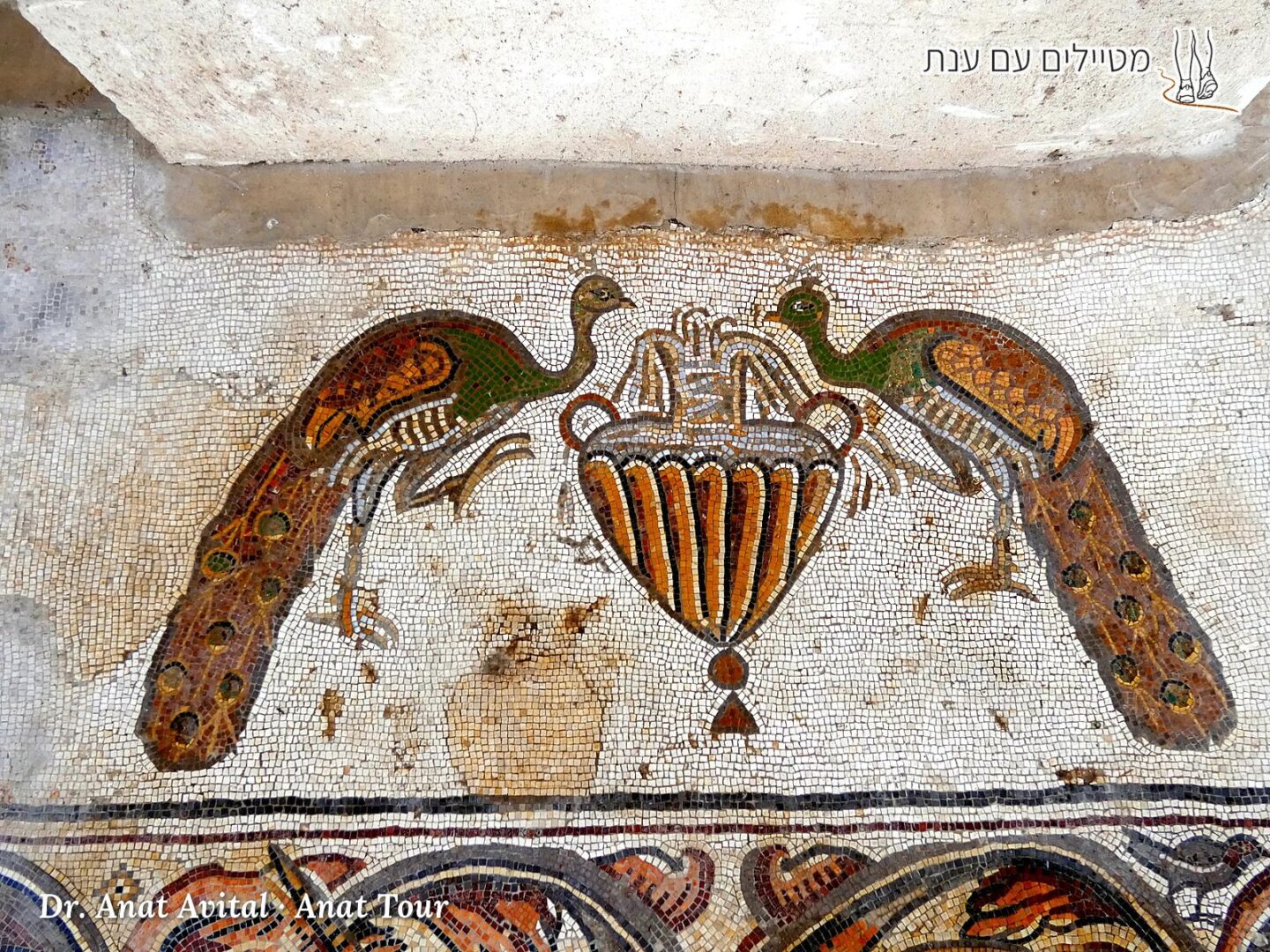
The mosaic shows domesticated birds, and beside them hunted birds. The domesticated birds are the domestic chicken, the common pheasant and the Indian peafowl. A pair of peacocks flanks an amphora, near the bema. The Indian peafowl and the common pheasant were brought to the country from afar, and their appearance in the mosaic attests to domestication, keeping in captivity and import.
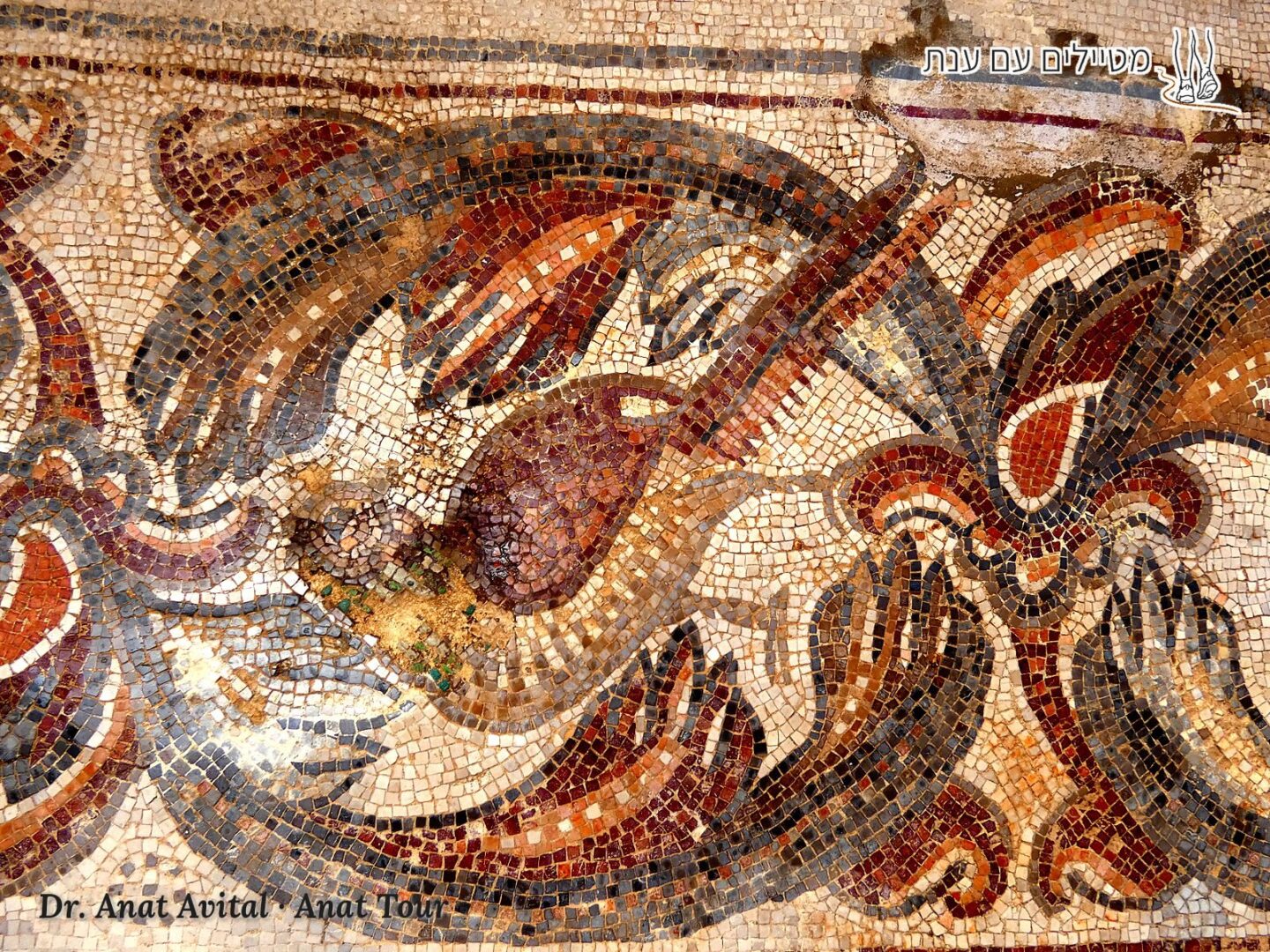
Among the hunted birds are several Eurasian blackcaps, females and a male. The blackcap is a migratory bird that passes through the Western Galilee in late summer and autumn and feeds on fruit. In the mosaics of the Land of Israel it is known only from Nahariya. Beside it are resident birds, present in the region all year round: the rock dove, which was hunted and kept in captivity, a female common blackbird and a hooded crow.
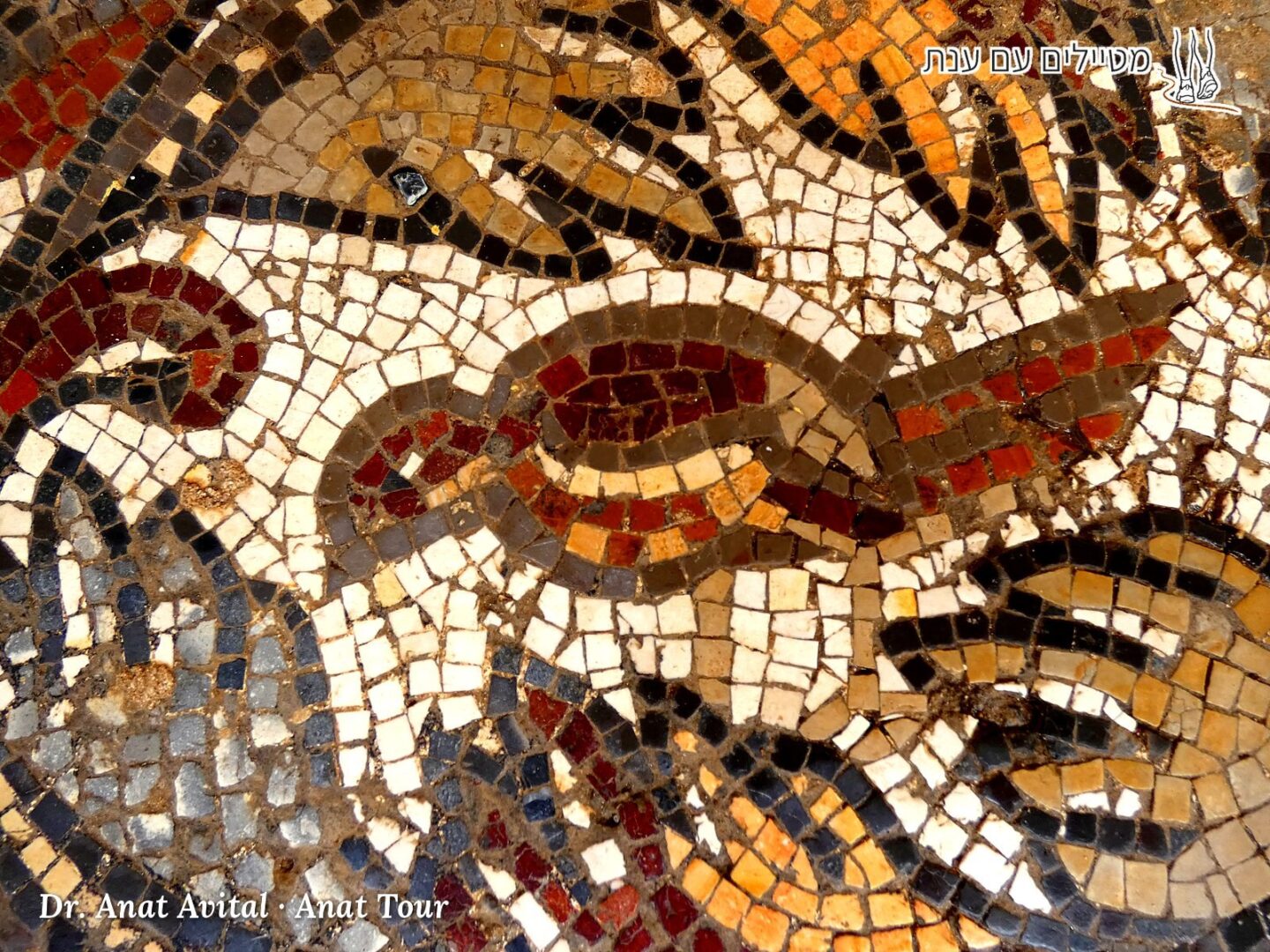
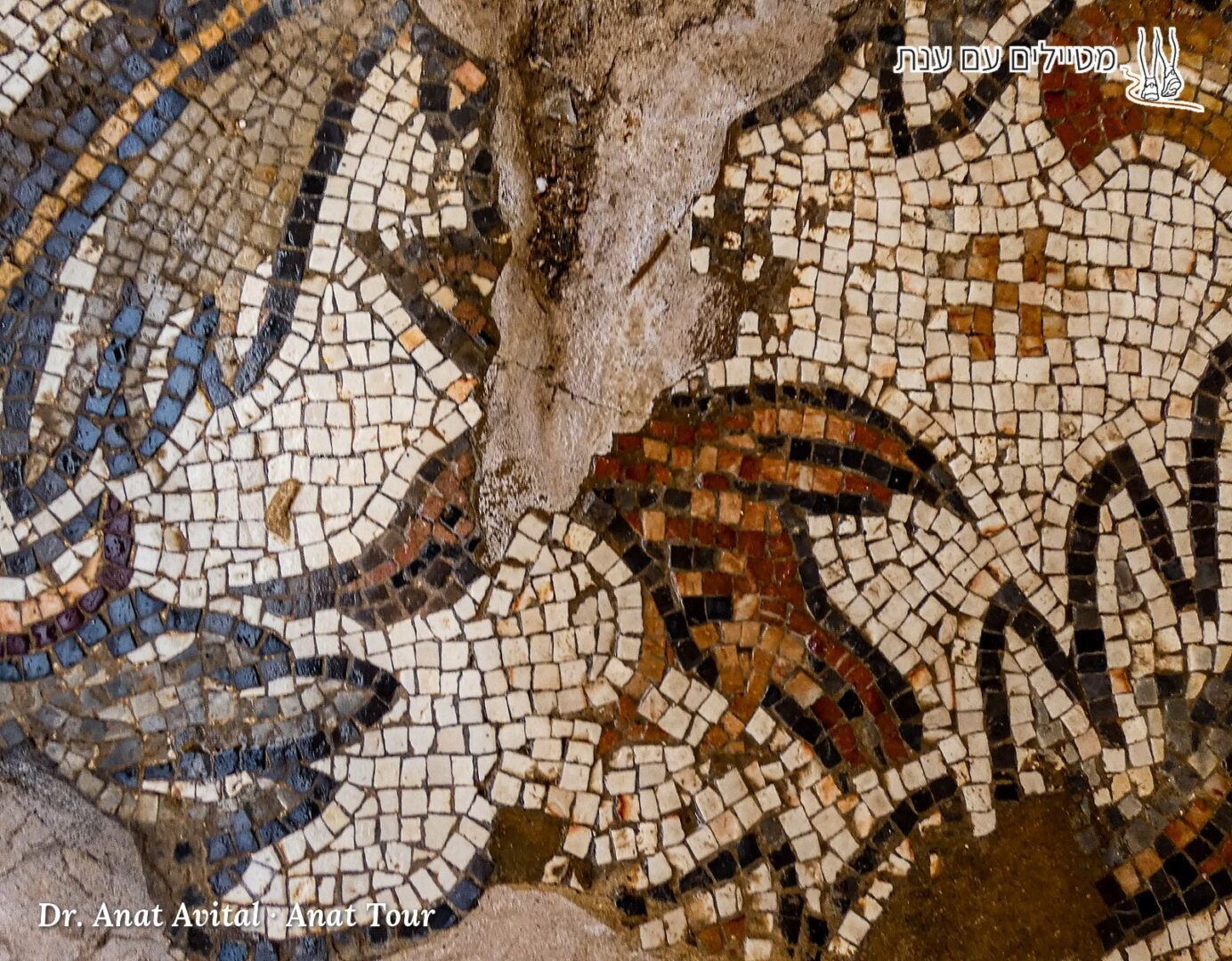
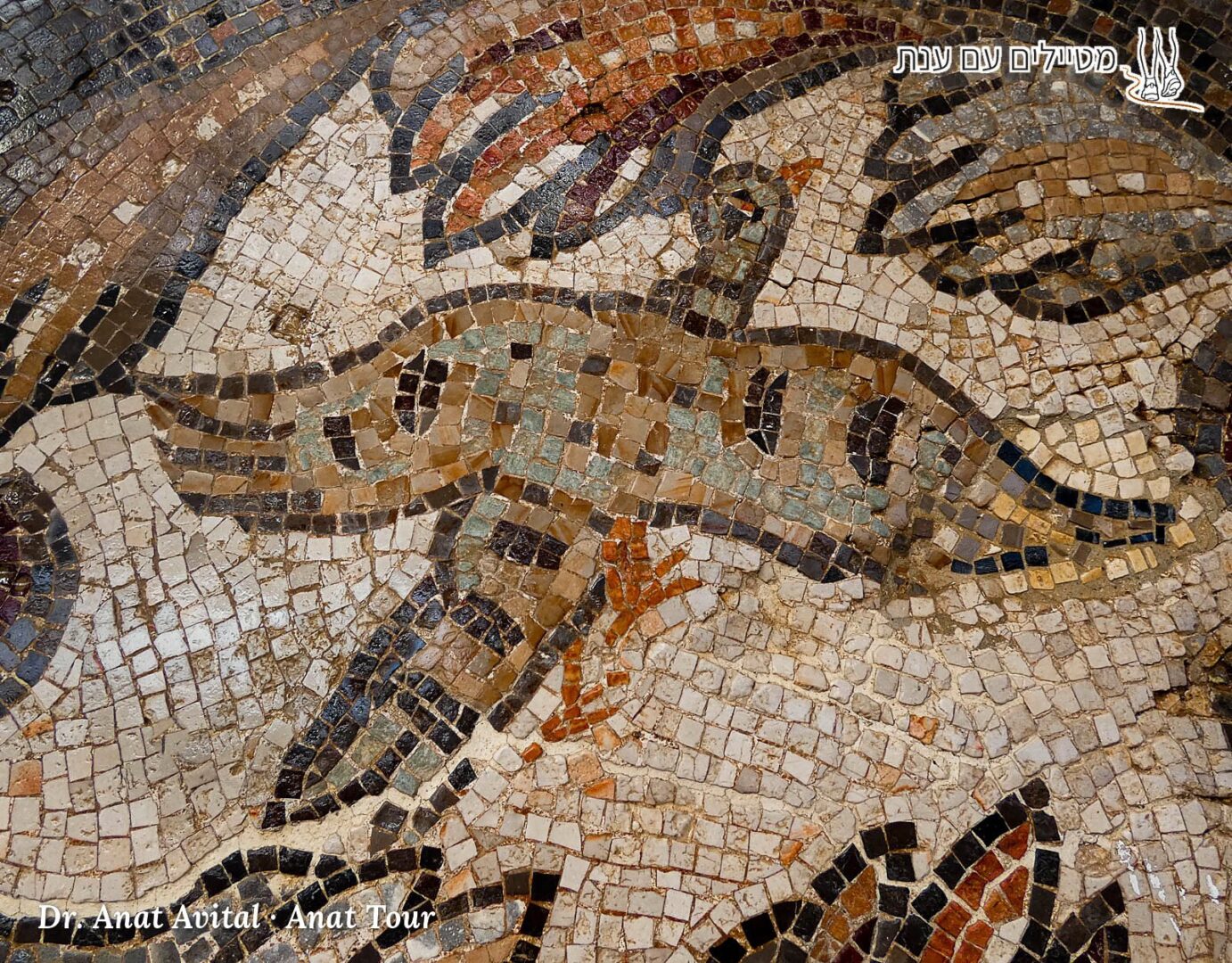
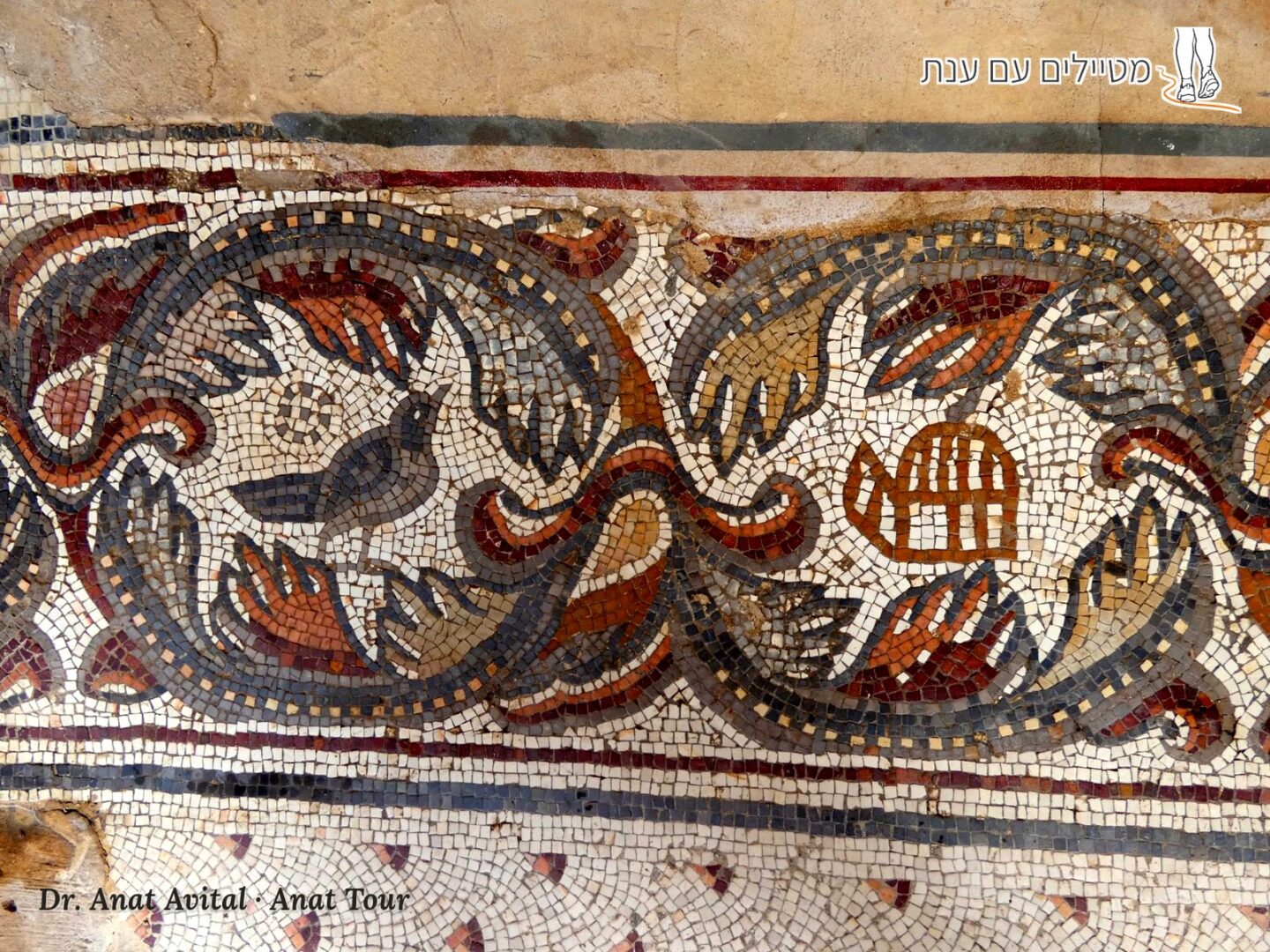
A pair of chukar partridges, male and female, is shown in a single medallion. The male is identified by the spur on his leg, and the female is depicted without a spur. The partridges were caught in the wild, and were kept and bred in captivity.
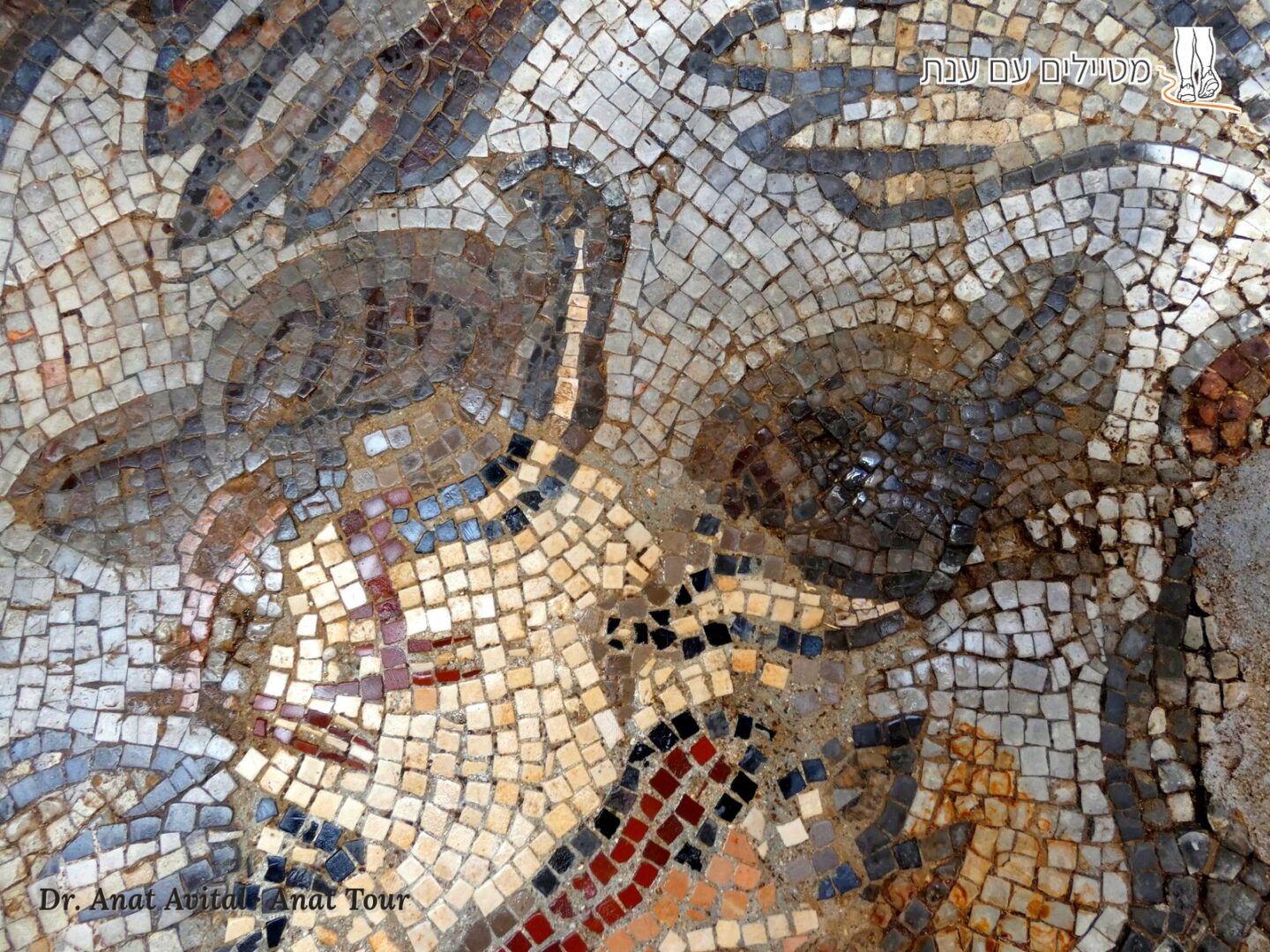
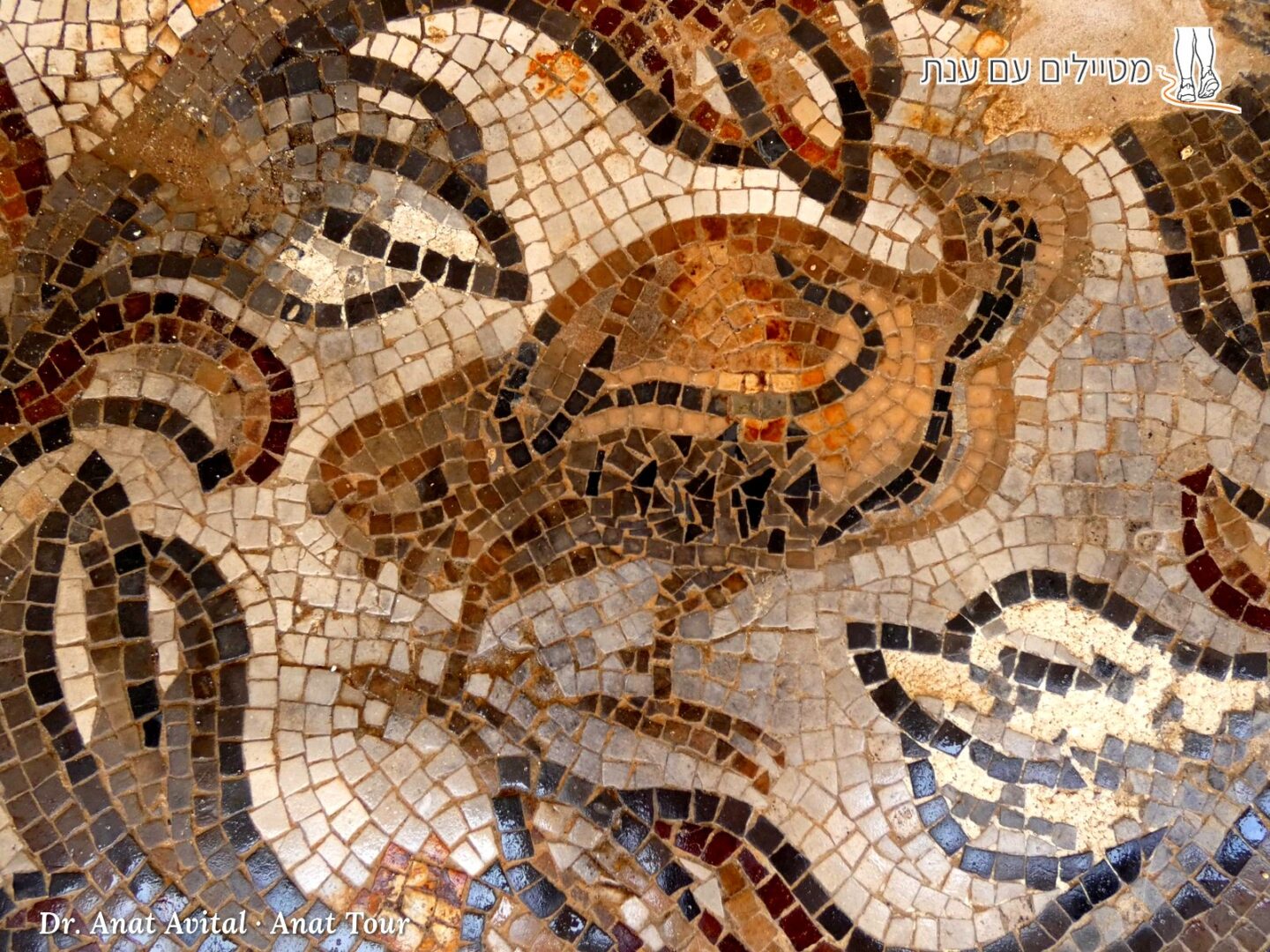
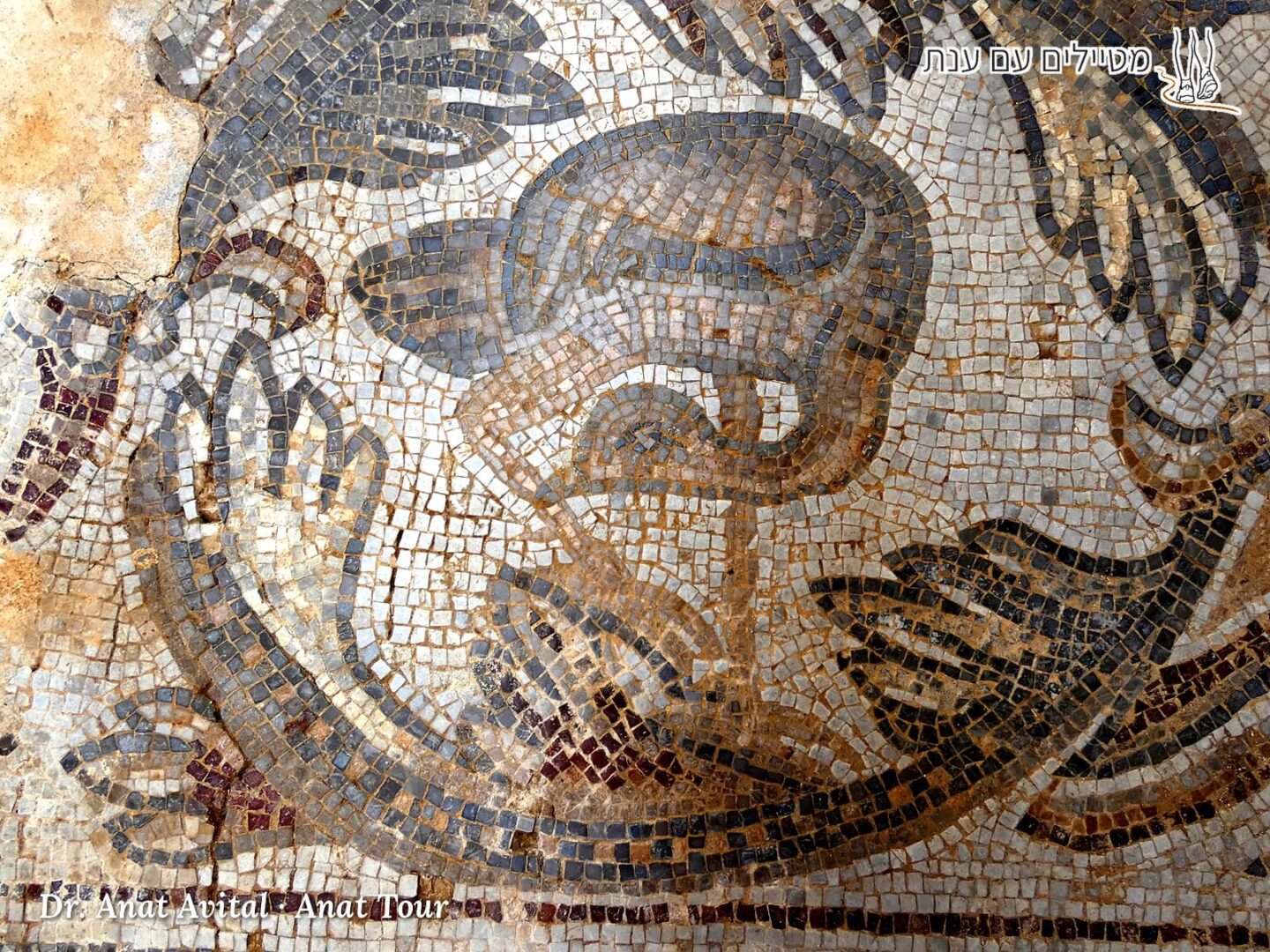
Other hunted birds are the black francolin, a resident bird, and three common cranes, large migratory birds. Each crane is shown in a separate medallion: one in a sleeping stance, its head tucked under its wing; the second standing on one leg, its head turned back and its eyes open; and the third, particularly large, walking.
Human Figures
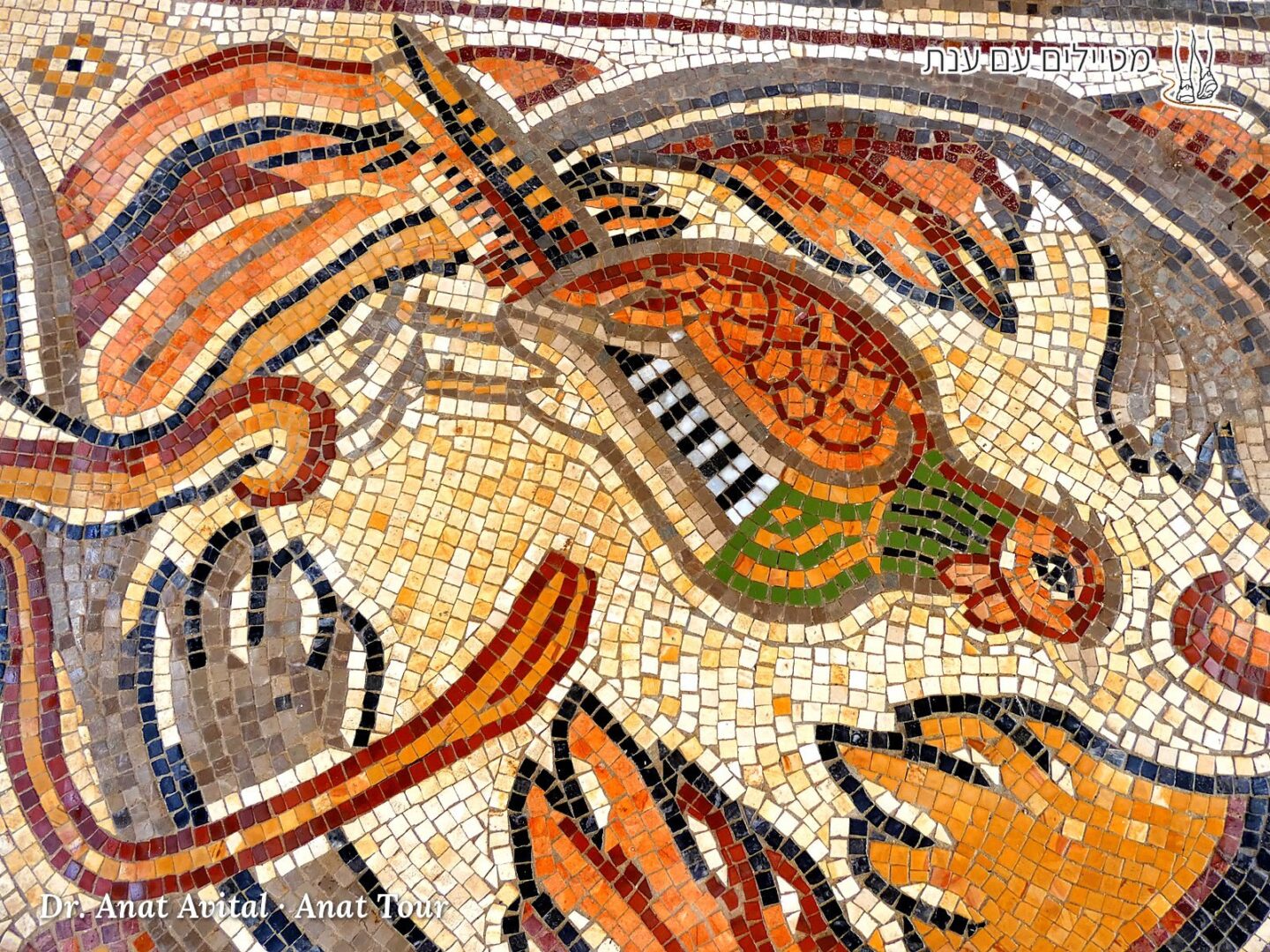
The mosaic shows labourers at agricultural work, barefoot and wearing only a loincloth. Some are also engaged in defence, holding spears against the great predators: lion, tiger, bear and leopard. One labourer leads a horse with a clapper bell on its neck.
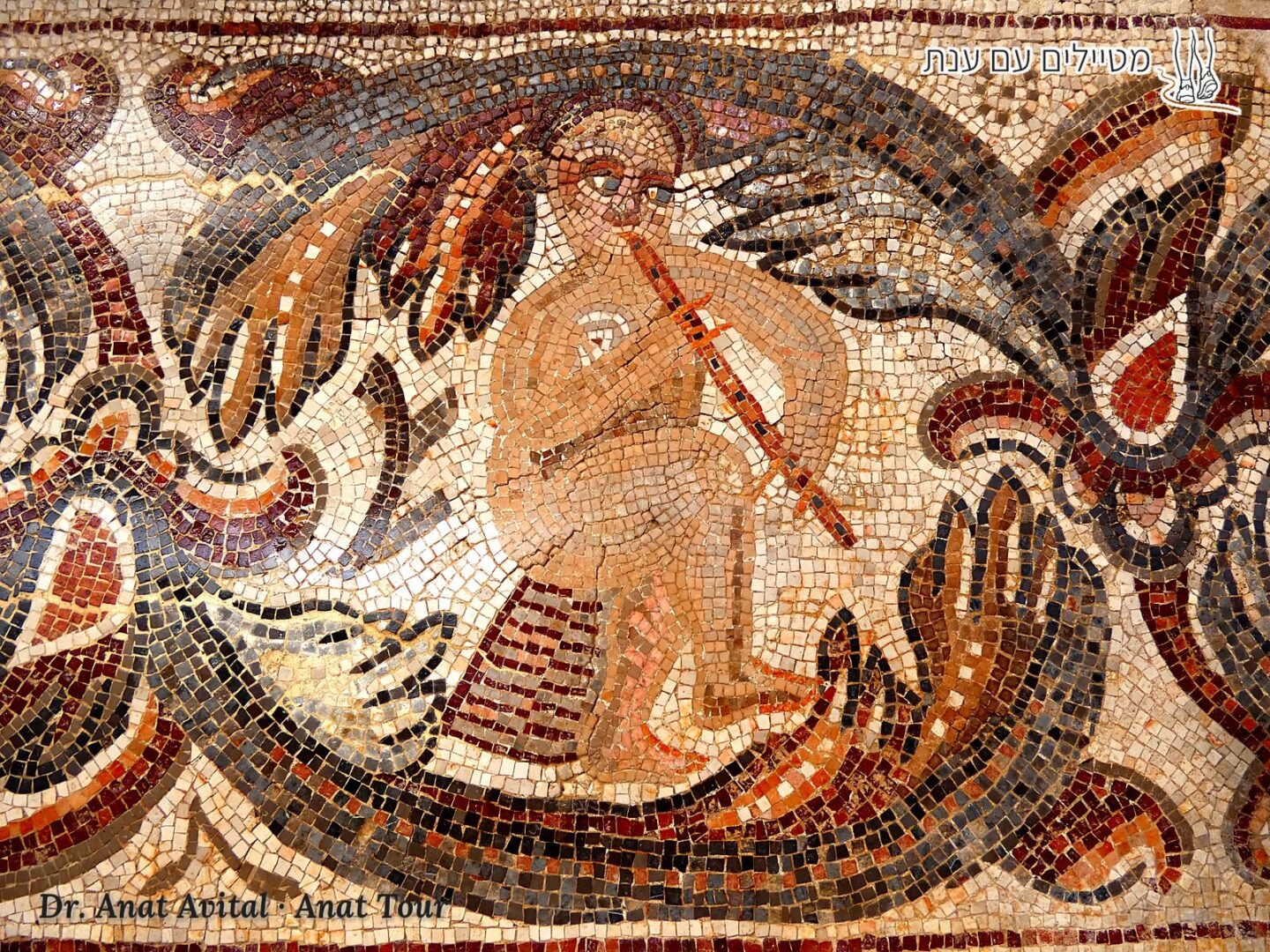
A shepherd or vineyard worker sits on an upturned kalathos basket and plays a flute. The figure recalls other mosaics of the period that depict life in the vineyard.
Fruit and Vegetables
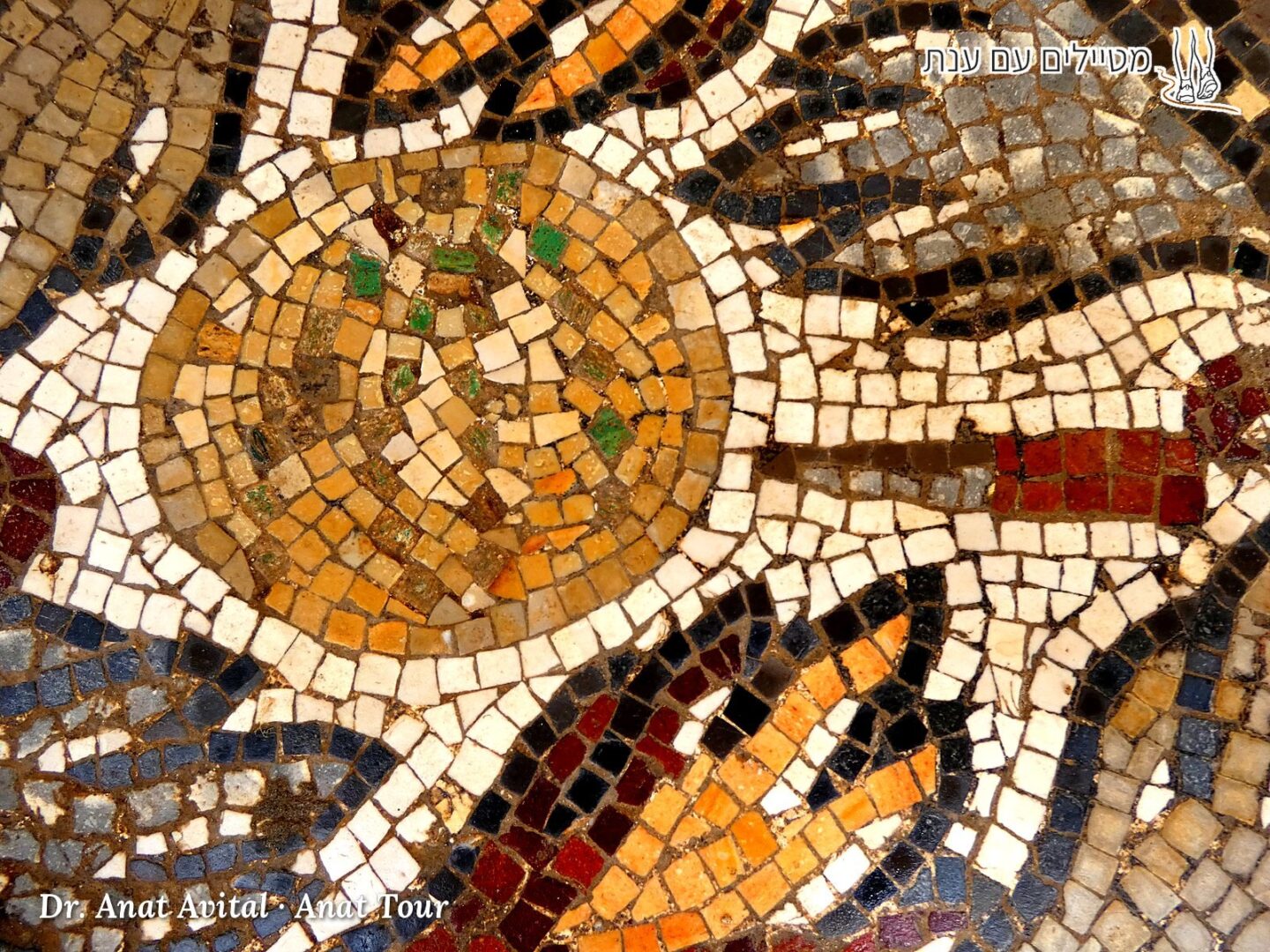
The fruits in the mosaic are bunches of grapes, pomegranates, figs served on a leaf of taro (Colocasia antiquorum), and a ripe yellow watermelon with green radial stripes on its surface, with a knife beside it for cutting the watermelon into slices for eating. All ripen during the summer and early autumn, and are shown ripe and ready to eat.
The taro leaf served as a serving dish, as can also be seen in the mosaic of the church at Kursi and in the mosaics of Antioch (Antakya, Turkey). The mosaic also shows an artichoke (Cynara).
Shrimps
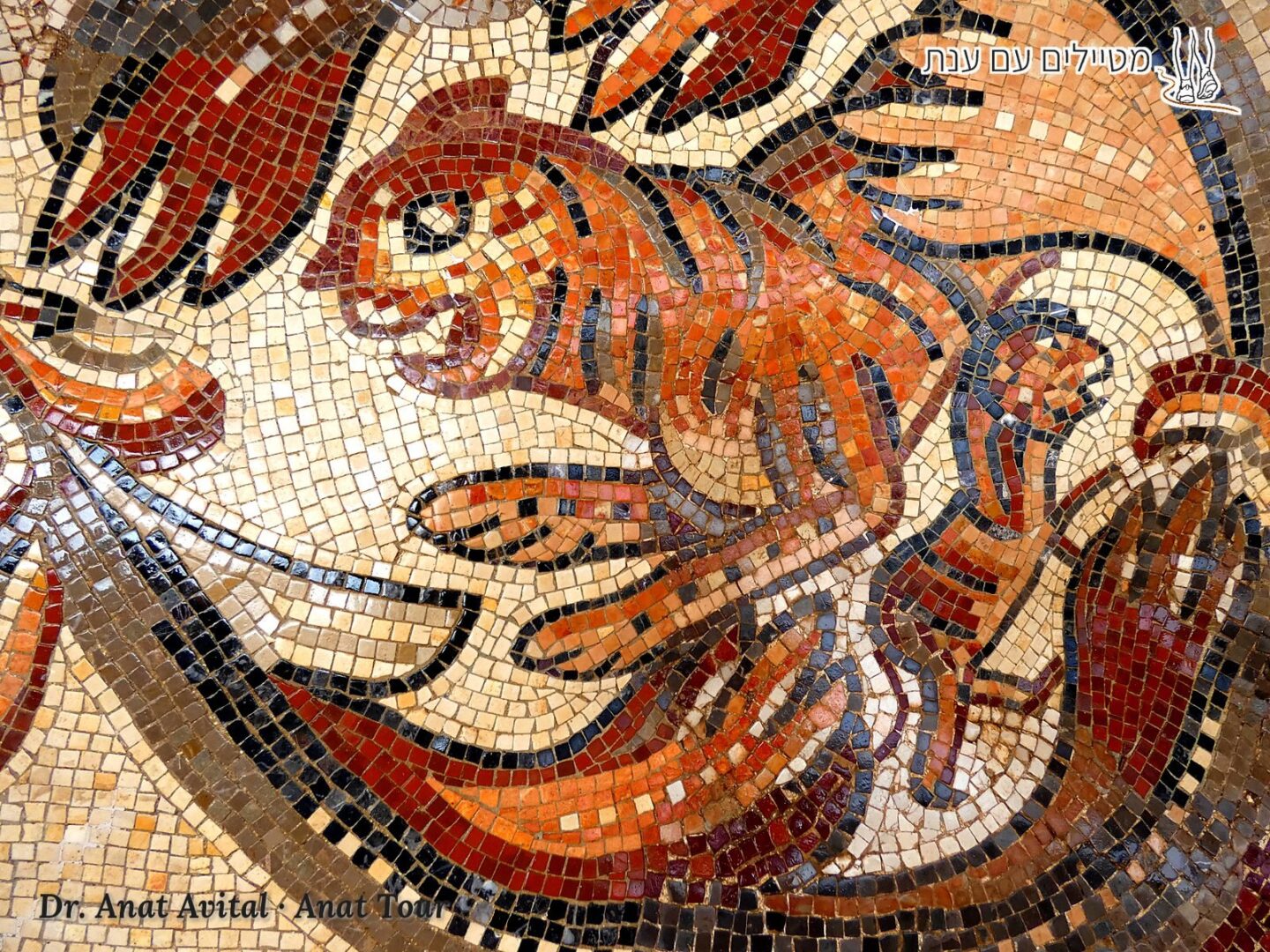
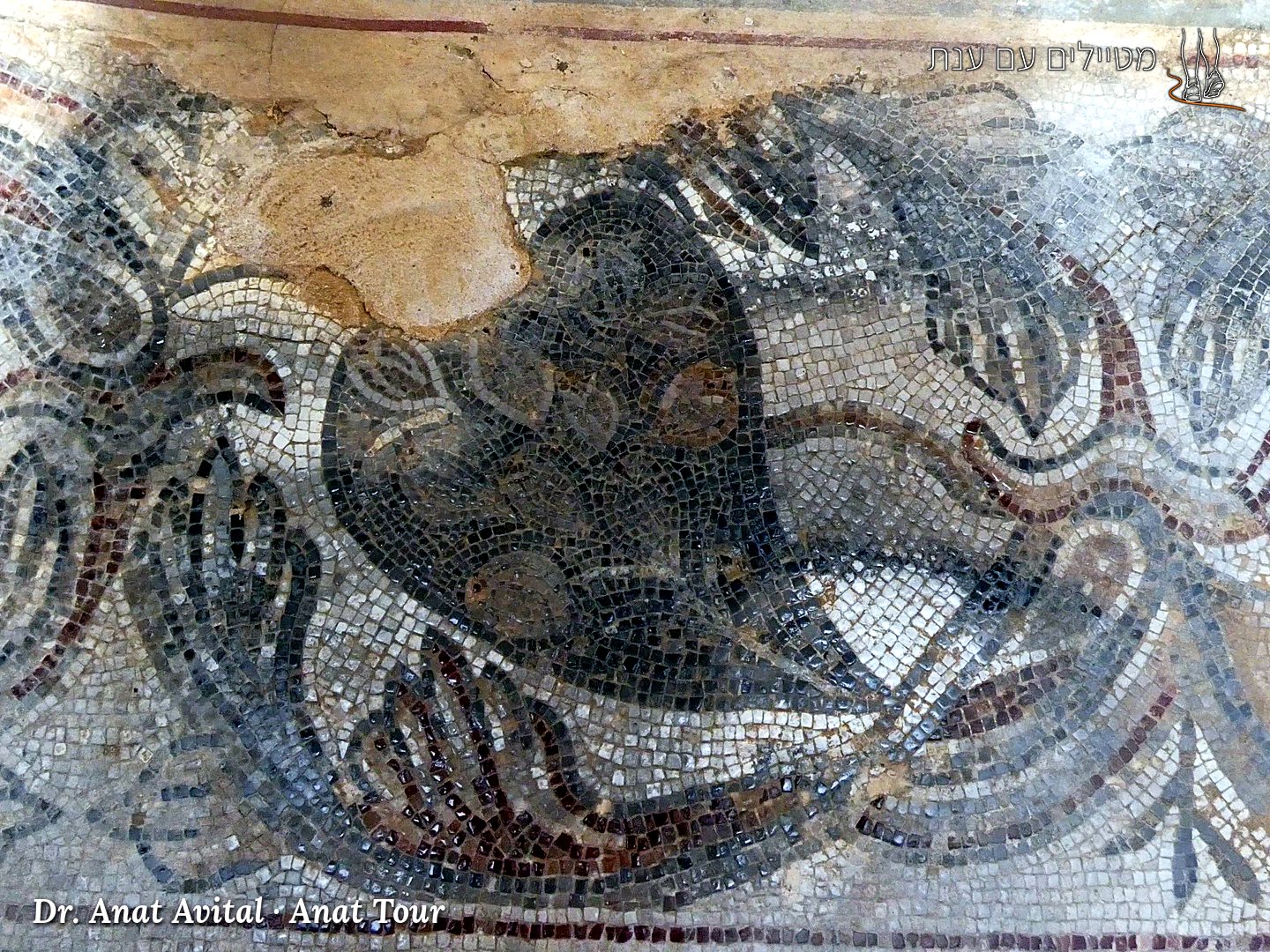
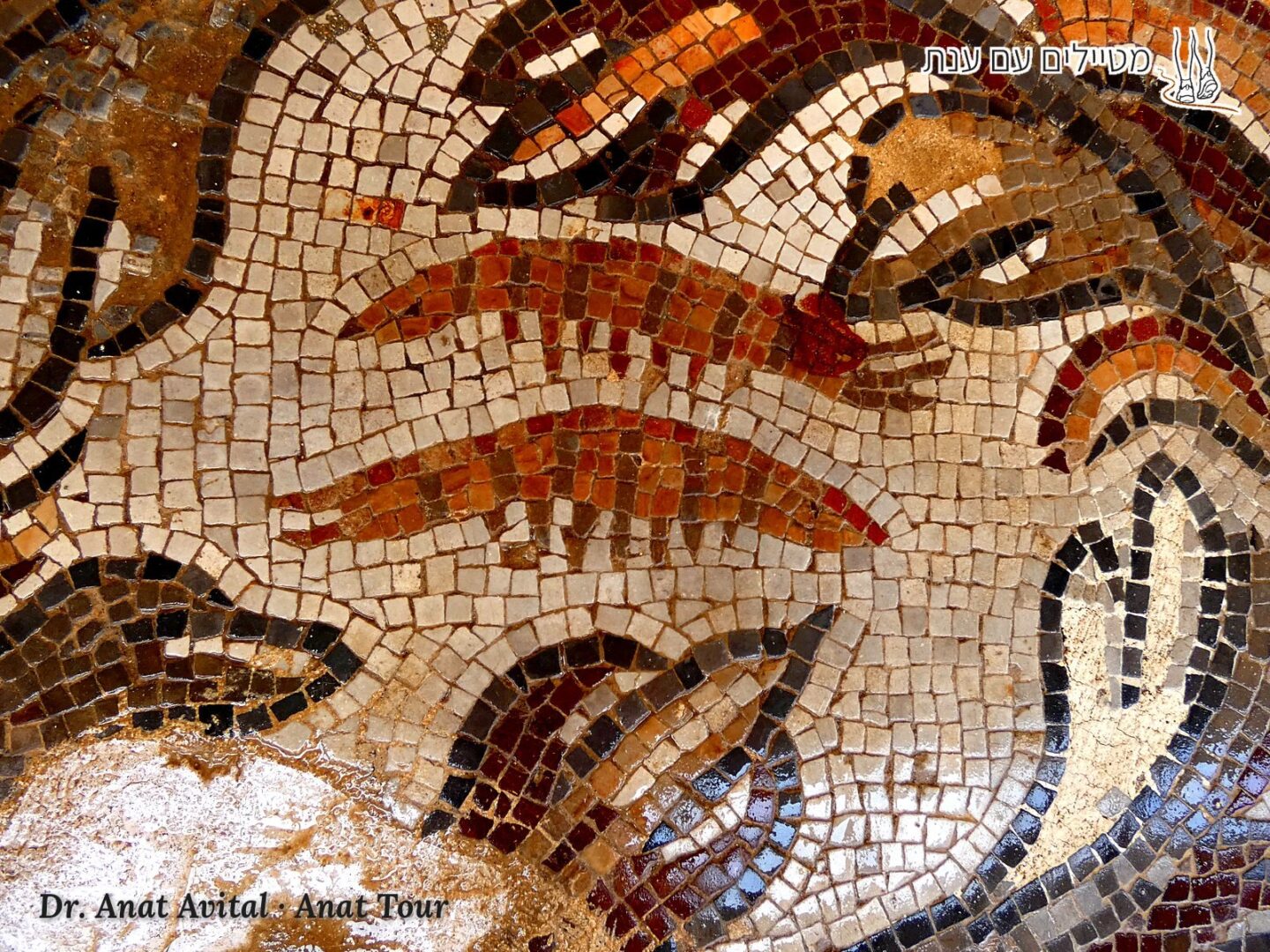
The mosaic shows a pair of shrimps. The shrimps represent fishing and mariculture.
The Animal and Plant Species in the Mosaic
Mammals: lion, tiger, leopard, Syrian brown bear, mountain gazelle, Persian fallow deer, hare, zebu cattle, fat-tailed sheep, goat, horse and Canaan dog.
Birds: Indian peafowl, common pheasant, domestic chicken, chukar partridge, black francolin, rock dove, common blackbird, hooded crow, Eurasian blackcap, common crane and Eurasian sparrowhawk.
Invertebrates: shrimp.
Plants: grapevine, pomegranate, fig, citron, watermelon, artichoke (Cynara), rose and taro (Colocasia antiquorum).
The Bird-Catcher
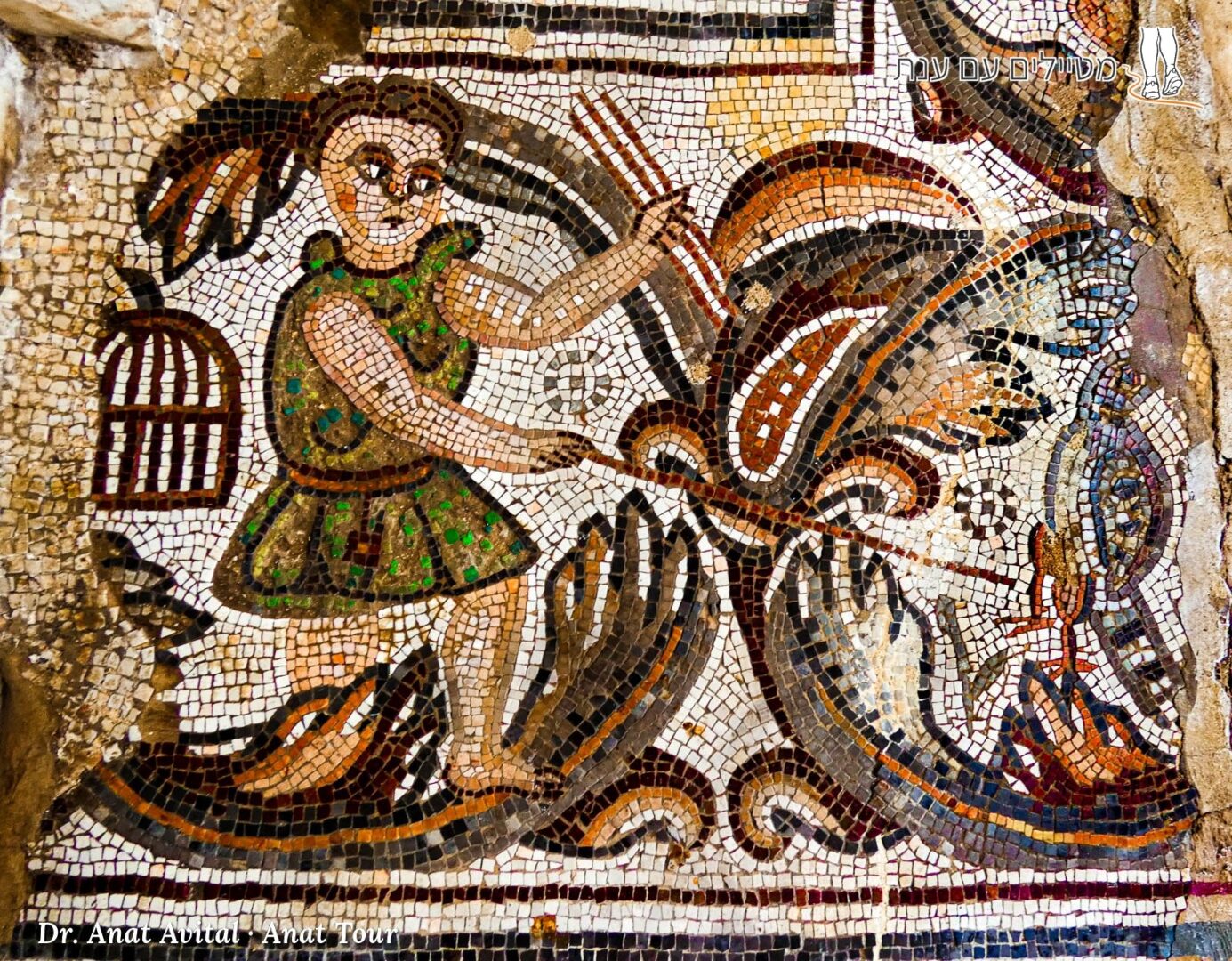
In front of the bema, at its southern corner, a professional bird-catcher in a green tunic holds four limed sticks. Facing him, in the adjacent medallion, stands a Eurasian sparrowhawk. This is the only known depiction of bird-catching with limed sticks in the mosaics of the Land of Israel.
The scene is discussed in detail in my article published in English on Zenodo: Avital 2026, The Fowler, the Sparrowhawk and the Birds.
Dr. Anat Avital | Anat Tour
Sources
Avital, A. 2026. The Fowler, the Sparrowhawk and the Birds: Ancient Methods for Controlling and Exploiting Pest Birds in the Byzantine Church Mosaic at Nahariya. Preprint, Zenodo. https://doi.org/10.5281/zenodo.24040177
Dauphin, C. and Edelstein, G. 1984. L’église byzantine de Nahariya (Israël): étude archéologique (Byzantina Mnēmeia 5). Thessaloniki.
Dauphin, C. and Edelstein, G. 1993. The Byzantine Church at Nahariya. In: Y. Tsafrir (ed.), Ancient Churches Revealed. Jerusalem: 49–53.
Edelstein, G. and Dauphin, C. 1986. The Byzantine Church on Givat-Katzenelson at Nahariya. In: M. Yedaya (ed.), The Western Galilee Antiquities. Tel Aviv: 387–392 (Hebrew).
Kraus, Y. and Israeli, Y. 2026. Hezbollah missile hits ancient Byzantine church in Nahariya, 1,400-year-old site damaged. Ynetnews, 11 April 2026. Link
Sela-Eitam, M. 2026. Nahariya’s Byzantine church hit by Hezbollah rocket reopens to public after four months. The Jerusalem Post, 6 August 2026. Link
Sudilovsky, J. 2022. Impressive Byzantine mosaic restored 30 years after its discovery, made available for the public. The Jerusalem Post, 10 April 2022. Link
Visiting details: the Byzantine site page on the Nahariya Municipality website [in Hebrew].


