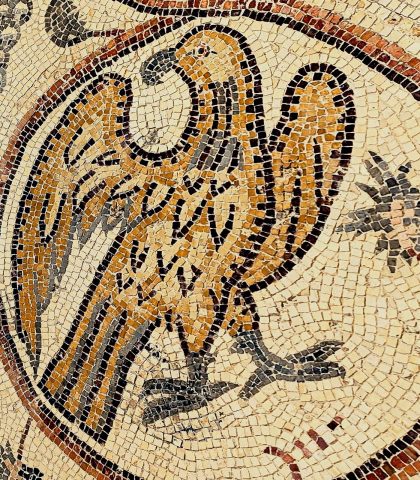
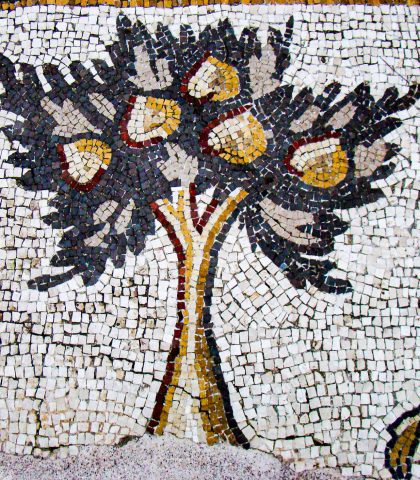
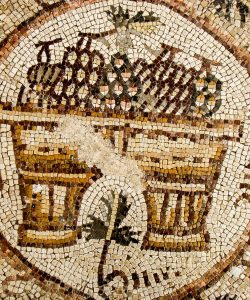
The Mosaic Book is an encyclopedic summary of multidisciplinary academic research, systematic and in-depth. It offers a systematic framework for identification, classification, and taxonomic ordering of plant species, birds, and mammals, as well as selected species of aquatic animals in mosaic imagery from the Land of Israel and its surrounding region.
This book is based on a systematic biological-agricultural methodology for examining figurative imagery in ancient mosaics. The starting point is scientific identification of species, developmental stages, and processes of cultivation and domestication, integrating botanical, zoological, and agrotechnological knowledge.
This is a conscious epistemological choice: viewing the image not merely as decoration, but as material-visual evidence of environmental, agricultural, and economic knowledge. The approach seeks to examine the findings using taxonomic classification and ordering tools, and to establish the discussion on the basis of precise identification and documented realia.
On the botanical level, the research focuses on identifying plant species and analyzing their placement and appearance in mosaic imagery, while examining the history of plant cultivation in antiquity and agrotechnological aspects of growing, transporting, processing, and serving food. The discussion integrates economic and cultural contexts and positions the visual image as part of a system of production, trade, and representation of abundance.
On the zoological level, a systematic study of birds and mammals is conducted, including comprehensive survey, taxonomic classification, and analysis in various contexts: natural habitats, capture, use of animals for food, labor, and hunting, demonstration of domestication capabilities, and interregional trade relations.
Alongside the botanical and zoological mapping, the book emphasizes the cultural dimension of the imagery: representations of abundance, fertility, and blessing, concepts of ownership and control over nature, and long-term processes of domestication and cultivation of plants and animals for human benefit.
The mosaics are examined as an arena where agricultural knowledge, ideology of prosperity, social hierarchies, and household economy converge—from field and vineyard to dining table and public space. Thus it becomes clear that artistic imagery is not merely documentation of existing reality, but also a conscious cultural statement about order, abundance, and human capacity to shape the natural environment.